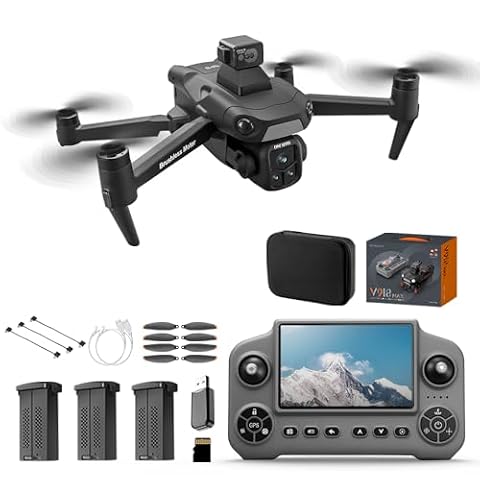
APEX FPV Drone Kit Alternatives: 6 Similar Picks Compared
Review 6 apex fpv drone kit alternatives based on factory specifications. Discover how camera stabilization, flight failsafes, and goggles differ across models to find your ideal setup.
As Amazon Associates, we earn from qualifying purchases. This means we may receive a small commission at no extra cost to you if you click through and make a purchase.
As an Amazon Associate we earn from qualifying purchases. Links on this page are affiliate links.
If you want different flight capabilities or camera hardware, exploring apex fpv drone kit alternatives helps you find the right match for your flying style. The original APEX kit provides a ready-to-fly package with 5.8G goggles, optical flow hovering, and three batteries delivering 15 to 18 minutes of flight time. It supports pilots learning manual throttle control with turtle mode recovery and altitude hold options. You may prefer an alternative brand or a design focused on stabilized aerial video rather than analog FPV training.
If your priorities include 4K video resolution, mechanical 3-axis gimbals, GPS auto-return, or palm takeoff, other models deliver those specifications. The original quadcopter weighs 1.76 pounds and measures 3.3 by 3.3 inches, whereas alternatives provide lighter sub-249-gram airframes or automated tracking modes. These 6 alternatives were chosen because their specifications overlap with the original in compact dimensions, multi-battery options, and beginner-focused controls. Comparing published specifications helps you balance flight handling against capture quality.
Comparing APEX FPV Drone Kit Alternatives
DJI Mini 4K Drone with 3-Axis Gimbal
APEX gives you an immersive FPV goggle setup, manual throttle control, and crash recovery via turtle mode. DJI Mini 4K shifts focus to stabilized camera capture with a motorized 3-axis gimbal and 4K recording. It includes Auto Return failsafes and weighs 8.47 ounces, keeping it under the 249-gram threshold. You give up the 120-degree field-of-view goggles, direct non-spring throttle handling, and the modular three-battery kit. Pick the Mini 4K if you want steady aerial video and assisted navigation rather than manual first-person flight training.
DJI Neo 2 Lightweight 4K Drone
The APEX kit uses physical goggles and a remote with manual throttle controls. DJI Neo 2 replaces that manual piloting setup with palm takeoff and omnidirectional obstacle sensing. It records video in 4K resolution and weighs 5.33 ounces, making it significantly lighter than the 1.76-pound APEX package. However, you trade away the low-latency 5.8G goggle feed, turtle mode flip recovery, and black box crash recording. Choose the Neo 2 if you want hands-off takeoff and sensor-backed obstacle detection for solo 4K clips instead of stick-controlled FPV practice.
DJI Neo Fly More Combo 4K Drone
APEX includes 5.8G goggles with a 120-degree view, non-spring manual throttle, and optical flow hovering. The DJI Neo Fly More Combo focuses on portable recording with 4K video capture and palm takeoff at a weight of 4.76 ounces. While APEX ships with three batteries for 15 to 18 minutes of flight, this setup emphasizes quick automated deployment without goggle gear. You lose the dedicated analog video link, turtle mode, and lost buzzer alarm. Pick the Neo Fly More Combo if you need a pocket-sized 4K platform for direct palm launches.
SKYROVER S1 4K Mini Drone
APEX focuses on basic FPV agility with an optical flow sensor, lost buzzer, and 120-degree goggles. The SKYROVER S1 centers on mechanical camera stabilization, pairing a 3-axis gimbal with 4K video capture. At 8.78 ounces, it sits in the sub-249g weight class. By choosing the S1, you surrender the analog 5.8G immersion, manual throttle mode, and turtle mode self-righting function found in the APEX kit. Select the SKYROVER S1 if your priority is stabilized 4K footage from a sub-249g airframe rather than learning manual acrobatic FPV flight maneuvers.
Potensic ATOM SE 4K EIS Drone
APEX relies on optical flow hovering, a lost buzzer, and manual flight modes without satellite navigation. The Potensic ATOM SE incorporates built-in GPS and an Auto Return feature for automated position holding and failsafe returns. It records in 4K resolution using electronic image stabilization (EIS) and weighs 8.8 ounces. In exchange, you forgo the real-time 5.8G FPV goggles, manual non-spring throttle flying, and turtle mode recovery. Opt for the ATOM SE if you want GPS positioning and stabilized 4K recording instead of an analog goggles-based trainer kit.
HOVERAir X1 Self-Flying Camera Drone
The APEX kit requires direct manual piloting through a remote controller and low-latency FPV goggles. The HOVERAir X1 automates the flight path completely, featuring palm takeoff and automated follow-me tracking. At 4.41 ounces, it is much lighter than the 1.76-pound APEX system and measures just 1.18 inches tall. You give up the manual freestyle mode, the 15-to-18-minute flight time across three batteries, and crash-recovery turtle mode. Pick the HOVERAir X1 if you want hands-free personal tracking instead of active multi-mode FPV quadcopter piloting.
| # | Product | Best for | Price |
|---|---|---|---|
| 1 | APEX Brushless FPV Drone Kit Best overall | beginners learning manual FPV flight | |
| 2 | DJI Mini 4K Drone with 3-Axis Gimbal Best premium | stabilized 4K aerial video under 249 grams | |
| 3 | DJI Neo 2 Lightweight 4K Drone Best budget | Palm-launch solo 4K video recording | |
| 4 | DJI Neo Fly More Combo 4K Drone Also great | controller-free tracking and compact 4K travel video | |
| 5 | SKYROVER S1 4K Mini Drone Best stabilization | Long-range, highly stabilized aerial filming | |
| 6 | Potensic ATOM SE 4K EIS Drone Best eis | lightweight 4K recording with electronic stabilization | |
| 7 | HOVERAir X1 Self-Flying Camera Drone Best follow me | hands-free automated tracking and quick social clips |
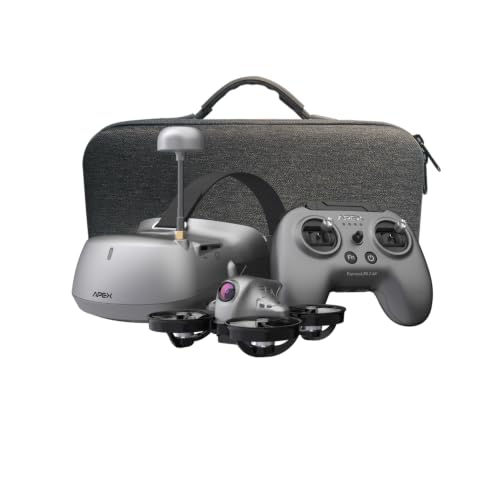
APEX Brushless FPV Drone Kit
Best for: beginners learning manual FPV flight
- Flight Time
- 15-18 min (total, 3 batteries)
- Dimensions
- 3.3 × 3.3 × 1.6 inches
- Weight
- 1.76 pounds
This ready-to-fly quadcopter kit includes FPV goggles with a 120-degree field of view and three batteries providing 15 to 18 minutes of total flight time. Features include optical flow hovering, crash-recovery turtle mode, and a non-spring left throttle for manual flight. You get a complete package suited for beginners learning flight control before attempting manual freestyle.
- Includes 5.8G FPV goggles with a 120-degree field of view
- Turtle mode flips the drone upright after crashes
- Includes three batteries providing 15 to 18 minutes of total flight time
- Optical flow hovering and altitude hold assist novice handling
- DVR and flight black box support memory cards only up to 32 GB
- Total flight time reaches 15 to 18 minutes across three separate batteries
- You want an all-in-one FPV starter kit that includes goggles and multiple batteries.
- You need beginner assist features like optical flow hovering and crash recovery.
- You require continuous single-battery flight times exceeding six minutes.
- You plan to record onboard video using memory cards larger than 32 GB.
Verdict: APEX Brushless FPV Drone Kit provides a complete hardware package for novice pilots transitioning from optical flow assist to full manual throttle control.
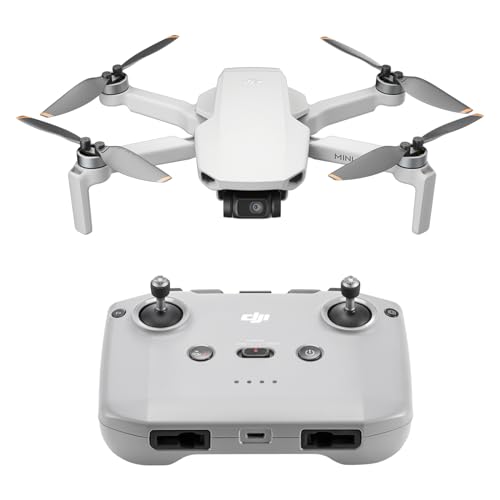
DJI Mini 4K Drone with 3-Axis Gimbal
Best for: stabilized 4K aerial video under 249 grams
- Video Resolution
- 4K UHD
- Takeoff Weight
- Under 249 g
- Flight Time
- 31 min
- Gimbal Stabilization
- 3-axis
- Transmission Range
- 10km
- Weight Class
- Under 249g
You get a sub-249-gram camera drone featuring a 3-axis mechanical gimbal and 4K UHD video recording. It delivers up to 31 minutes of flight time per charge and uses an RC-N1C controller with a 10-kilometer video transmission range. It suits you if you want stabilized aerial video and GPS return-to-home without FAA recreational registration requirements.
- 3-axis mechanical gimbal stabilizes 4K UHD video
- Sub-249 g takeoff weight requires no FAA recreational registration
- 10 km video transmission range with included RC-N1C controller
- Level 5 wind resistance rated up to 38 kph
- DJI Fly app requires direct download outside Google Play for Android
- Base package includes only one battery for 31 minutes total airtime
- You want 4K video stabilized by a physical 3-axis gimbal.
- You need a sub-249 g airframe to skip FAA registration for hobby use.
- You prefer automated flight modes such as QuickShots and GPS return-to-home.
- You want a dedicated acrobatic FPV quadcopter with goggles.
- You only install Android applications directly from Google Play.
Verdict: DJI Mini 4K Drone with 3-Axis Gimbal provides stabilized 4K capture, GPS failsafes, and a 10-kilometer link for pilots prioritizing camera stability over manual FPV flight.

DJI Neo 2 Lightweight 4K Drone
Best for: Palm-launch solo 4K video recording
- Video Resolution
- 4K
- Takeoff Weight
- 151g
- Obstacle Sensing
- Omnidirectional
- Smart Features
- Palm Takeoff
- Dimensions
- 6.74 × 5.8 × 1.59 inches
- Weight
- 5.33 ounces
The DJI Neo 2 is an ultralight drone built for quick aerial recording. It weighs 151g and captures 4K video. Built-in omnidirectional obstacle sensing protects the airframe, while full-coverage propeller guards add safety during flight. You can operate it hands-free using palm takeoff and gesture control. This standalone package suits you if you want automated solo tracking without handling bulky gear.
- Weighs 151g with C0 certification
- Omnidirectional obstacle sensing with integrated propeller guards
- 4K video recording with ActiveTrack subject following
- Palm takeoff, landing, and gesture control support
- Includes only one flight battery
- Package does not include a dedicated remote controller
- DJI Fly app requires direct download outside Google Play for Android
- You want an ultralight 151g drone for quick palm launches and automated tracking.
- You prioritize safety features like omnidirectional obstacle sensing and built-in prop guards.
- You require a dedicated physical remote controller in the package.
- You need multiple batteries included for longer continuous flight sessions.
Verdict: DJI Neo 2 Lightweight 4K Drone fits creators looking for an ultralight 151g flying camera with omnidirectional obstacle avoidance and palm-launch features. It gives you quick solo capture capability without carrying a separate transmitter.

DJI Neo Fly More Combo 4K Drone
Best for: controller-free tracking and compact 4K travel video
- Video Resolution
- 4K UHD
- Takeoff Weight
- 135g
- Smart Features
- Palm Takeoff
- Dimensions
- 6.18 × 5.12 × 1.9 inches
- Weight
- 4.76 ounces
The DJI Neo Fly More Combo is a 135-gram palm-sized quadcopter recording in 4K UHD. This package includes an RC-N3 controller, three flight batteries, and a two-way charging hub. You can launch directly from your hand, run eight automated QuickShots, or control flight via voice, phone, or physical remote. Enclosed propeller guards protect indoors and around obstacles.
- Lightweight 135-gram takeoff weight requires no registration
- Includes RC-N3 transmitter, three batteries, and two-way charging hub
- 4K UHD stabilized video with eight QuickShots automated modes
- Full-coverage propeller guards protect blades during flight
- Wind resistance limit tops out at level 4
- Voice control features only support English and Chinese
- You want a sub-249g kit equipped with three batteries and a charging hub.
- You need controller-free palm launches and automated subject tracking.
- You plan to fly indoors or close to obstacles with guarded propellers.
- You require flight capability in winds stronger than level 4.
- You want an analog or digital FPV goggle system included out of the box.
Verdict: DJI Neo Fly More Combo provides an ultra-lightweight 135-gram 4K setup with three batteries and physical transmitter control for users seeking autonomous tracking without flying heavy gear.

SKYROVER S1 4K Mini Drone
Best for: Long-range, highly stabilized aerial filming
- Video Resolution
- 4K/60fps
- Sensor Size
- 1/2" CMOS
- Takeoff Weight
- Under 249g
- Flight Time
- 40 minutes
- Obstacle Sensing
- Forward
- Gimbal Stabilization
- 3-axis mechanical
The Skyrover S1 is an ultralight drone weighing under 249 grams with a mechanical 3-axis gimbal. Unlike basic fixed-camera quadcopters, it pairs a 1/2-inch CMOS sensor recording 4K video at 60 frames per second with up to 40 minutes of flight time. You get forward obstacle avoidance and a 7.45-mile transmission range, making it suitable for long-distance aerial filming.
- Mechanical 3-axis gimbal stabilizes 4K video at 60fps
- Up to 40 minutes of flight time per battery
- 7.45-mile video transmission with 1080p live feed
- Ultralight takeoff weight under 249 grams
- Obstacle avoidance sensors are limited to forward detection
- Vertical shooting mode drops resolution to 2.7K
- You need mechanical 3-axis stabilization to prevent wind jitter.
- You want long flight sessions up to 40 minutes per charge.
- You prioritize an ultralight sub-249g design for recreational flying.
- You require omnidirectional or rear obstacle sensing.
- You want native 4K resolution for vertical format videos.
Verdict: Skyrover S1 Ultralight Drone provides mechanical 3-axis stabilization, 40-minute battery endurance, and long-range transmission for pilots focusing on smooth cinematic video under 249 grams.

Potensic ATOM SE 4K EIS Drone
Best for: lightweight 4K recording with electronic stabilization
- Takeoff Weight
- less than 249g
- Flight Time
- 31 minutes
- Gimbal Stabilization
- EIS
- Transmission Range
- up to 4Km
- Video Resolution
- 4K
- Weight Class
- Under 249g
The Potensic ATOM SE is a folding GPS camera drone built for travel and outdoor filming. Weighing under 249 grams, it avoids FAA registration requirements while offering up to 31 minutes of flight per battery. Its 1/3-inch Sony sensor records 4K video at 30 fps stabilized by ShakeVanish electronic image stabilization, making it ideal if you want compact aerial video.
- Under 249g takeoff weight requires no FAA registration
- Electronic image stabilization with 4K recording at 30 fps
- Total 62-minute flight time across two included 2500mAh batteries
- Transmission range up to 4km using PixSync 2.0
- Relies on electronic stabilization rather than a mechanical gimbal
- Video recording caps at 30 fps in 4K
- Micro SD card not included
- You want a sub-249g drone with electronic image stabilization for steady 4K recording.
- You need extended sessions using the two included 31-minute batteries.
- You want safety features such as GPS auto-return and waypoint flight.
- You require a mechanical 3-axis gimbal instead of digital EIS.
- You need 4K capture at frame rates higher than 30 fps.
Verdict: Potensic ATOM SE 4K EIS GPS Drone gives pilots reliable electronic stabilization, GPS return, and dual-battery flight times in an unregistered sub-249g frame.

HOVERAir X1 Self-Flying Camera Drone
Best for: hands-free automated tracking and quick social clips
- Video Resolution
- 2.7K@30fps, 1080P HDR
- Flight Time
- 11 minutes
- Smart Features
- Follow Me, Palm Takeoff
- Dimensions
- 5 × 5.71 × 1.18 inches
- Weight
- 4.41 ounces
The HOVERAir X1 is a compact 4.41-ounce flying camera built for hands-free tracking. It records video up to 2.7K at 30 fps and follows subjects at speeds up to 15 mph across pre-programmed modes like Orbit and Follow. With 32GB of built-in storage and enclosed propeller guards, it suits active solo creators wanting quick automated clips.
- Enclosed safety guards protect propellers during close-range tracking
- Pre-programmed paths automate Hover, Follow, Zoom Out, Orbit, and Bird's Eye shots
- Built-in 32GB internal storage eliminates the need for external memory cards
- Lightweight 4.41-ounce frame supports palm takeoff
- Maximum video resolution caps at 2.7K at 30 fps rather than 4K
- Flight time is limited to 11 minutes per battery
- You need automated follow-me flight modes at speeds up to 15 mph.
- You prefer an enclosed frame that supports palm takeoff.
- You want built-in 32GB storage without buying memory cards.
- You require 4K video resolution.
- You need flight times longer than 11 minutes per battery.
Verdict: HOVERAir X1 Follow-Me Camera Drone serves solo creators who prioritize automated tracking modes and safe, enclosed propellers over 4K recording and extended battery life.
Specifications side by side
| Spec | APEX Brushless FPV Drone Kit | DJI Mini 4K Drone with 3-Axis Gimbal | DJI Neo 2 Lightweight 4K Drone | DJI Neo Fly More Combo 4K Drone | SKYROVER S1 4K Mini Drone | Potensic ATOM SE 4K EIS Drone | HOVERAir X1 Self-Flying Camera Drone |
|---|---|---|---|---|---|---|---|
| Video Resolution | – | 4K UHD | 4K | 4K UHD | 4K/60fps | – | 2.7K@30fps, 1080P HDR |
| Sensor Size | – | – | – | – | 1/2" CMOS | – | – |
| Takeoff Weight | – | Under 249 g | 151g | 135g | Under 249g | less than 249g | – |
| Flight Time | 15-18 min (total, 3 batteries) | 31 min | – | – | 40 minutes | 31 minutes | 11 minutes |
| Obstacle Sensing | – | – | Omnidirectional | – | Forward | – | – |
| Gimbal Stabilization | – | 3-axis | – | – | 3-axis mechanical | EIS | – |
| Transmission Range | – | 10km | – | – | 7.45 Miles | up to 4Km | – |
| Photo Resolution | – | – | – | – | 48MP | – | – |
| Stabilization | – | 3-Axis Gimbal | – | – | 3-Axis Gimbal | EIS | – |
| Weight Class | – | Under 249g | – | – | Under 249g | Under 249g | – |
| Smart Features | – | Auto Return | Palm Takeoff | Palm Takeoff | – | Auto Return | Follow Me, Palm Takeoff |
| Target Audience | – | – | – | – | – | Beginners | – |
| Features | – | – | – | – | Stabilization | GPS | – |
| Dimensions | 3.3 × 3.3 × 1.6 inches | 7.87 × 6.29 × 2.16 inches | 6.74 × 5.8 × 1.59 inches | 6.18 × 5.12 × 1.9 inches | 6.3 × 3.8 × 2.5 inches | 5.63 × 3.46 × 2.28 inches | 5 × 5.71 × 1.18 inches |
| Weight | 1.76 pounds | 8.47 ounces | 5.33 ounces | 4.76 ounces | 8.78 ounces | 8.8 ounces | 4.41 ounces |
| Color | BLACK | Gray | Gary | gray | White | Gray | Black |
| Model | – | MT2SD | 6937224131767 | 6941565988294 | – | DSDR04B | X1 edition |
| Size | – | – | DJI Neo 2 (Drone Only) | 6.18 x 5.12 x 1.9 inches | – | 11.81 x 9.64 x 2.28 inches | Combo |
Another guide worth a look: timetec 64gb kit alternatives.
Frequently asked questions
Which APEX alternatives offer mechanical camera stabilization?
Both the DJI Mini 4K and the SKYROVER S1 feature mechanical 3-axis gimbals for 4K video recording. Unlike manual FPV drones that use fixed camera mounts, these motorized gimbals physically counter tilt and movement. This mechanical leveling keeps your horizon steady while the drone maneuvers through the air.
How do palm-launch drones compare to manual FPV drone kits?
Palm-launch models like the HOVERAir X1 and DJI Neo emphasize automated recording over pilot-directed acrobatic flight. You activate them directly from your hand without needing manual throttle management. Manual FPV kits require active stick inputs to maintain flight posture, whereas palm-launch units prioritize hands-free tracking and quick clip recording.
What is the difference between electronic image stabilization and a mechanical gimbal?
The Potensic ATOM SE uses electronic image stabilization rather than physical motorized axes to steady 4K video. EIS corrects shake digitally through internal software cropping. In contrast, mechanical 3-axis gimbals physically rotate the camera sensor to absorb flight vibration and tilt without reducing your recording resolution or field of view.
Which drone alternatives weigh under 249 grams?
The DJI Mini 4K, SKYROVER S1, and Potensic ATOM SE all list designated weight classes under 249 grams. Additionally, ultralight options like the DJI Neo and the 4.41-ounce HOVERAir X1 stay well below this mark. Lighter weights reduce airframe inertia and often bypass certain regional regulatory requirements for recreational drones.
Which compact alternative includes obstacle sensing?
The DJI Neo 2 provides omnidirectional obstacle sensing paired with its palm takeoff feature. Standard manual FPV kits omit proximity sensors entirely, relying on pilot vigilance and skill to avoid collisions. Omnidirectional sensing monitors surroundings in multiple directions to help prevent accidental impacts with nearby objects during autonomous flight.
Can you fly any of these alternatives without a traditional handheld transmitter?
Yes, both the HOVERAir X1 and DJI Neo 2 support standalone operation via palm takeoff. The HOVERAir X1 executes automated follow-me flight modes completely hands-free, so you do not need a remote control during filming. Traditional FPV kits require a dedicated radio transmitter to pilot the craft continuously.