DJI Mavic 3 Review (2026): A Spec-Based Look
Examine the DJI Mavic 3 using verified specifications. Learn how its Hasselblad 4/3 CMOS sensor, 5.1K video, 15-kilometer transmission range, and 46-minute flight time affect your flying.
As Amazon Associates, we earn from qualifying purchases. This means we may receive a small commission at no extra cost to you if you click through and make a purchase.
As an Amazon Associate we earn from qualifying purchases. Links on this page are affiliate links.
This dji mavic 3 review examines an aerial imaging drone built around a 4/3 CMOS Hasselblad camera and a 46-minute maximum flight time. These two specifications define its primary capability, pairing 5.1K capture with long airtime on a single battery. You also receive omnidirectional obstacle sensing for safety coverage, a 15-kilometer O3 Plus transmission range, and an Advanced Return to Home feature. Weighing 1.97 pounds, the gray chassis measures 8.7 by 3.6 by 3.8 inches. Operating limits cover temperatures from -10° to 40° C and altitudes up to 6000 meters.
- 4/3 CMOS Hasselblad camera with 12.8 stops of dynamic range and 5.1K video recording
- Up to 46 minutes of maximum flight time on a single battery
- Omnidirectional obstacle sensing for flight safety
- O3 Plus transmission system with up to a 15-kilometer range
- Advanced Return to Home system for optimized route navigation
Good fit for
This drone suits pilots who need large-sensor imaging and extended flight endurance. If your work demands high dynamic range, the 4/3 CMOS Hasselblad camera delivers 12.8 stops with 5.1K resolution. The 46-minute flight time fits operators who need prolonged airtime per battery without frequent landings. It also serves long-distance missions requiring up to 15 kilometers of O3 Plus signal transmission and omnidirectional obstacle sensing.
Who can skip it
Skip this model if you need a lightweight, pocket-sized device. At 1.97 pounds and 8.7 inches in length, it requires dedicated pack space compared to smaller drones. You should also reconsider if you plan flights outside its rated operating temperature range of -10° to 40° C or above its 6000-meter ceiling. Those wanting a compact setup may find its 3.8-inch height and 3.6-inch width too bulky.
Verdict
The DJI Mavic 3 provides substantial imaging power with its 4/3 CMOS Hasselblad sensor and an expansive 46-minute flight time. Its omnidirectional sensing and 15-kilometer transmission range make it a capable tool for demanding aerial capture.
Key Specifications and What They Mean
15-kilometer max transmission range
A 15-kilometer transmission distance uses the O3 Plus system to keep your live video feed clear and steady during flight. In everyday operation, extra transmission headroom reduces video drops caused by environmental interference. Pilots flying in open rural settings or expansive coastal areas benefit the most. When shopping for camera drones, compare this reach with other models to ensure adequate signal margins in busy radio environments.
12.8-stop dynamic range
A 12.8-stop dynamic range measures how well the camera retains visual information in deep shadows and bright highlights simultaneously. For your everyday shooting, this preserves detail in high-contrast scenes like bright skies behind dark terrain. Aerial creators who film during sunrise or sunset benefit significantly from this sensor exposure flexibility. Compare this metric to cameras with narrower exposure ranges to assess highlight retention before editing your footage.
Max Service Ceiling Above Sea Level : 6000 m
A 6000-meter service ceiling defines the maximum altitude above sea level where the aircraft can sustain flight. In practical use, this allows you to launch from high-elevation base points such as mountain passes without motor strain. Commercial photographers and mountain explorers operating in elevated terrain benefit most from this capability. Compare this altitude ceiling against models rated for lower elevations to confirm whether your high-altitude flight locations are supported.
Weight: 1.97 pounds
Weighing 1.97 pounds, this quadcopter balances wind resistance with overall packability. In everyday use, this mass gives you flight stability in variable breezes while remaining manageable to carry in a backpack. Traveling videographers and outdoor shooters who hike to locations benefit from its compact footprint. When shopping across drone categories, compare this weight against lighter camera drones to decide whether you prioritize wind stability or a lighter pack burden.
Airframe Design, Dimensions, and Operating Limits
According to the listing, the DJI Mavic 3 comes in a gray finish and measures 8.7 inches long, 3.6 inches wide, and 3.8 inches high. Its total weight is 1.97 pounds. These compact dimensions mean you can slide the airframe into standard camera bags or transport packs without monopolizing gear space. Carrying a sub-two-pound craft keeps your kit portable on long hikes while providing enough physical substance to manage outdoor flights reliably.
The external layout houses omnidirectional obstacle sensing components designed to watch for hazards in every direction during flight. To safeguard your drone, the system incorporates a Smart Return to Home feature, which calculates an automated route back to your launch point. According to the listing, the build also supports a maximum flight distance of 30 kilometers, demonstrating an airframe configured for wide-area aerial travel.
In terms of operating limits, the listing specifies an environmental tolerance between -10° and 40° C (14° to 104° F). You also receive a maximum service ceiling of 6000 meters above sea level. These figures mean you can deploy the hardware in freezing alpine conditions, high-altitude terrain, or hot summer climates without exceeding documented operational boundaries.
Setup Parameters and Daily Flight Operation
Preparing the DJI Mavic 3 for routine operation begins with confirming your flight environment matches its operating specifications. The drone is rated to fly in temperatures between -10° and 40° C (14° to 104° F) and supports a maximum service ceiling of 6000 m above sea level. Planning your launch within these thresholds ensures the hardware operates within manufacturer parameters.
During daily flights, managing your airtime centers on the single-battery capacity, which delivers up to 46 minutes of flight duration. For long-distance travel, the hardware supports a maximum flight distance of 30 km. Throughout normal navigation, the Advanced RTH system manages aircraft recovery. You can trigger RTH manually, or allow the drone to engage auto return when it detects a low battery. Upon activation, the system calculates an optimized route to guide the quadcopter back to your home point.
For everyday imaging, the 4/3 CMOS Hasselblad camera utilizes a 12.8-stop dynamic range to balance shadow and highlight exposure. You can deploy the aircraft across different configurations, as the platform is listed as a standalone drone, a Fly More Combo, or a Cine Premium Combo.
Before Purchasing the DJI Mavic 3
Before you buy, decide which package style matches your workflow. The drone is available as a standalone DJI Mavic 3, a Fly More Combo, or a Cine Premium Combo. If the standard single battery and 46-minute flight window limit your schedule, bundle packages provide extra flight gear. Handling high-resolution 5.1K video from the 4/3 CMOS Hasselblad sensor requires compatible computer hardware and fast storage capable of processing large video files. For routine maintenance, keep the omnidirectional obstacle sensing sensors clear of debris so the navigation system operates reliably. Finally, evaluate your target flight environment against the hardware limits. The 1.97-pound craft operates in temperatures from -10° to 40° C and altitudes up to 6000 meters above sea level. Evaluating these specifications ensures the model fits your exact filming demands.
Check before you buy
- Select between the base craft, Fly More Combo, or Cine Premium Combo packages.
- Verify your computer hardware supports processing high-bitrate 5.1K Hasselblad video files.
- Ensure planned flight locations stay within the -10° to 40° C temperature range.
- Confirm your flight altitudes do not exceed the 6000-meter service ceiling limit.
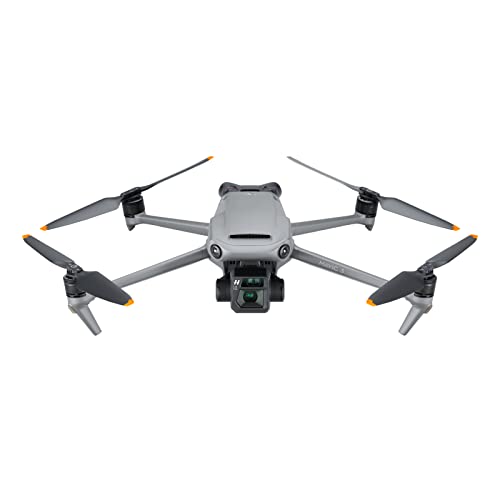
DJI Mavic 3 4/3 CMOS Drone
Best for: long-endurance 5.1K aerial videography
- Video Resolution
- 5.1K
- Sensor Size
- 4/3 CMOS
- Flight Time
- 46 minutes
- Obstacle Sensing
- Omnidirectional
- Transmission Range
- 15km
- Smart Features
- Auto Return
The DJI Mavic 3 is a camera quadcopter equipped with a 4/3 CMOS Hasselblad sensor that records 5.1K video. You get up to 46 minutes of flight time, omnidirectional obstacle sensing, and a 15-kilometer transmission range. It suits you if you need extended flight endurance, wide dynamic range, and automated return-to-home capabilities for outdoor filming.
- 4/3 CMOS Hasselblad camera records up to 5.1K video
- Max flight time of up to 46 minutes per battery
- Omnidirectional obstacle sensing system for flight safety
- O3 Plus transmission range reaches up to 15 kilometers
- Weight of 1.97 pounds adds bulk to transport gear
- Operating temperature is restricted to 14°F through 104°F
- You need long aerial sessions with up to 46 minutes of flight time.
- You want 4/3 CMOS sensor imaging with 5.1K video resolution.
- You require omnidirectional obstacle sensing for safer flight paths.
- You require an ultralight aircraft weighing significantly less than 1.97 pounds.
- You operate in environments outside the 14°F to 104°F temperature window.
Verdict: DJI Mavic 3 5.1K Camera Drone delivers 46-minute flight endurance, omnidirectional sensing, and 4/3 CMOS video capture for operators prioritizing high-resolution imaging over a lightweight pack.
Specifications side by side
| Spec | DJI Mavic 3 4/3 CMOS Drone |
|---|---|
| Video Resolution | 5.1K |
| Sensor Size | 4/3 CMOS |
| Flight Time | 46 minutes |
| Obstacle Sensing | Omnidirectional |
| Transmission Range | 15km |
| Smart Features | Auto Return |
| Dimensions | 8.7 × 3.6 × 3.8 inches |
| Weight | 1.97 pounds |
| Size | DJI Mavic 3 |
| Color | Gray |
| Model | 6941565919700 |
Frequently asked questions
What camera sensor does the DJI Mavic 3 use?
The DJI Mavic 3 features a 4/3 CMOS sensor. This larger sensor format captures more visual detail than smaller mobile sensors, making it suited for 5.1K aerial videography. You gain improved dynamic range and clearer frames during daylight or dusk flights.
How does obstacle detection work on the DJI Mavic 3?
The aircraft relies on omnidirectional obstacle sensing to detect hazards in all directions. Multiple vision sensors scan your surroundings continuously while flying. This full-coverage system helps you avoid collisions when navigating tight outdoor spaces or flying through complex flight paths.
What smart safety features are included on the DJI Mavic 3?
The drone includes an Auto Return smart feature to bring the aircraft safely back to you. When triggered, the automated system calculates a secure flight path back toward the takeoff point. This function gives you an added layer of security if you lose visual orientation during your flight.
What is the primary use case for the DJI Mavic 3?
The DJI Mavic 3 is best for long-endurance 5.1K aerial videography. Operators who need high-resolution video capture benefit from its 4/3 CMOS sensor and 46-minute flight endurance. These capabilities allow you to capture detailed landscape shots without landing frequently to swap out batteries.
Does the DJI Mavic 3 weigh under 250 grams?
No, the DJI Mavic 3 weighs 1.97 pounds, which is well above the 250-gram threshold. Because of this weight, you must follow standard drone registration guidelines in many jurisdictions before launching. The heavier frame provides stability when carrying the larger 4/3 CMOS camera module.
How long can the DJI Mavic 3 stay airborne on a single battery?
The platform delivers a 46-minute flight endurance per charge under ideal conditions. This extended airtime lets you plan complex flight tracks and capture broad landscapes in one session. You spend less time landing for battery changes and more time framing your aerial shots.


