Camera Drones Buying Guide (2026): What Matters and 8 Picks
Compare key specifications across 8 camera drones. Learn how airframe weight categories, obstacle sensing, and flight duration affect your aerial filming options.
As Amazon Associates, we earn from qualifying purchases. This means we may receive a small commission at no extra cost to you if you click through and make a purchase.
As an Amazon Associate we earn from qualifying purchases. Links on this page are affiliate links.
Choosing the right aircraft depends on how hardware features align with your aerial filming goals. This camera drone buying guide clarifies key specifications so you can decide which airframe fits your operational needs. You will evaluate how weight thresholds influence recreational registration rules, how sensor sizes impact overall video clarity, and when mechanical gimbals are essential for stable flight capture.
The guide walks you through trade-offs between battery runtimes, dedicated display controllers, and safety features like omnidirectional obstacle sensing. You will determine whether hands-free palm takeoff modes fit personal vlogging or whether larger dual-camera platforms suit technical landscape work. Every drone among the 8 recommendations was selected strictly from published specifications, allowing you to compare verified dimensions, camera resolutions, and flight hardware directly.
Key Specifications to Compare Before Buying
Weight Class and Airframe Size
Weight dictates both regulatory status and handling characteristics. Drones falling under the 249-gram threshold, such as the DJI Mini 4K Fly More Combo, do not require recreational registration in the United States and pack easily into small daypacks. Ultra-compact builds around 135 to 151 grams allow convenient pocket storage and casual transport. However, lighter airframes are more susceptible to wind drift and turbulence than heavier models. Aircraft scaling up to 1.6 or 1.75 pounds offer greater physical stability in turbulent weather and accommodate dual-lens setups or large battery cells. If you prioritize travel convenience and simple regulatory compliance, select sub-249g designs. Choose larger frames if you fly in open winds or need heavier payloads.
Look for
- Airframe weight staying strictly below 249 grams to bypass recreational registration mandates.
- Heavier chassis designs when you require structural resistance against open wind gusts.
Sensor Size and Camera Configuration
The dimensions of the image sensor directly determine how much light reaches the camera pixels. A large 1-inch CMOS sensor, featured on the DJI Air 3S Dual-Camera 4K Drone, collects substantial visual information to deliver clear imaging across high-contrast daylight and dim lighting. Standard compact sensors handle everyday outdoor sunlight well but can introduce image grain when light levels drop. Advanced configurations introduce secondary lenses, granting you alternate optical perspectives and flexible framing without moving the drone. The trade-off centers on mass and hardware dimensions, as large sensors and secondary lenses demand larger camera housings and heavier airframes. If you record primarily midday landscapes, standard camera modules suffice, while complex lighting demands a 1-inch CMOS sensor.
Look for
- A 1-inch CMOS sensor to maintain clean exposure across mixed and dim lighting.
- Dual camera configurations for alternating focal lengths without altering aircraft position.
Video Resolution and Frame Rates
Crisp aerial footage requires sufficient pixel counts and capture speeds to record smooth motion. Current quadcopters record in 4K resolution, providing sharp detail suitable for cropping or playback on high-definition displays. Frame rate specifications determine how natural fast motion appears. Standard recording runs at 30 frames per second, which works well for slow landscape pans. Faster specifications like 4K at 60 frames per second, available on models like the SKYROVER X1 4K Drone, capture fast-moving subjects and swift flight paths cleanly. High-speed recording can also enable slow-motion playback. The trade-off involves data throughput and storage, as higher frame rates rapidly fill memory cards and demand faster memory cards. Match your frame rate to your flight velocity.
Look for
- Ultra-high-definition 4K resolution to capture fine foliage and sharp structural edges.
- A 60fps frame rate when recording fast-moving sports or aggressive dynamic flight paths.
Mechanical Gimbal Stabilization
Rotor propulsion generates structural vibrations and tilts the airframe as the drone turns, climbs, and counters wind. A 3-axis mechanical gimbal actively isolates the camera along pitch, roll, and yaw axes using brushless motors, ensuring your video remains level and fluid. Drones like the DJI Mini 3 rely on dedicated stabilization assemblies to produce stable panoramic shots and level horizons. Aircraft relying purely on electronic dampening or fixed mountings reduce weight and mechanical complexity, but fast flight maneuvers or sudden gusts can introduce jitter and rolling shutter distortions into your clips. If your objective is cinematic video capture, a motorized 3-axis gimbal is essential. Simpler fixed camera mounts suit casual tracking where ultimate video smoothness is secondary.
Look for
- A motorized 3-axis gimbal assembly to mechanically isolate the camera from motor vibrations.
- Reliable horizon leveling to eliminate camera tilt during directional turning and wind compensation.
Obstacle Sensing and Detection
Flight safety systems rely on sensors to map the surrounding space and stop collisions before they happen. Omnidirectional obstacle sensing employs multiple optical lenses or LiDAR scanners to detect barriers in all directions around the drone. Models like the DJI Mini 5 Pro 1-Inch CMOS Drone integrate comprehensive detection arrays to protect the airframe when executing automated flight patterns or navigating confined environments. The trade-off lies in power draw and airframe weight, as continuous spatial scanning uses battery resources. Drones lacking all-around detection require manual visual observation and conservative flight lines, especially when tracking subjects sideways or backward. Choose omnidirectional detection if you plan to fly automated tracking routines near trees or structures.
Look for
- Omnidirectional optical or LiDAR arrays to identify nearby obstacles from any flight direction.
- Automated braking or path bypass routines that stop collisions during tracking modes.
Smart Flight and Launch Modes
Automated flight features streamline piloting routines and prevent lost aircraft. Smart functions range from satellite-backed Auto Return to hands-free palm takeoff. The DJI Neo 2 151g 4K Drone features palm-launch capability, letting you initiate tracking routines without unfolding a separate transmitter or pairing accessories. GPS integration and automated return modes calculate the flight path back to home coordinates if signal drops or battery levels become critical. The trade-off involves system independence versus direct control; automated tracking and quick launch modes suit rapid solo captures, while traditional transmitters offer tighter manual precision at distance. If you film solo action clips, prioritize automated tracking and palm launches. Traditional pilots should focus on GPS-linked return precision.
Look for
- Palm takeoff functions for rapid aerial deployment without requiring a handheld controller.
- GPS-linked Auto Return features that retrieve the aircraft if connection is interrupted.
Flight Endurance and Battery Kits
Air time limits how much footage you can collect during a single outing. Extended specifications reach up to 38 or 45 minutes on a single charge, granting ample time to frame compositions, test angles, and complete automated shots. Smaller, lighter airframes sacrifice internal battery capacity for minimal weight, requiring frequent pack swaps. Multi-battery packages, such as the DJI Neo Fly More Combo 4K Drone, supply extra packs and multi-chargers to keep you operating throughout an outing. The trade-off for extended single-battery duration is pack weight, which pushes aircraft toward registration requirements. If you hike or travel light, multiple compact packs offer flexibility. For uninterrupted landscape recording, seek single packs rated above 35 minutes.
Look for
- Single-charge runtimes above 35 minutes for relaxed composition and distant landscape capture.
- Multi-battery bundle packages to extend overall shooting time without immediate wall recharging.
Primary Types of Camera Drones
Sub-249-Gram Ultralight Camera Drones
Ultralight camera drones weigh under 249 grams to bypass recreational FAA registration requirements. Models like the DJI Mini 4K Fly More Combo and DJI Mini 5 Pro provide 4K video capture and 3-axis gimbal stabilization in compact, folding frames. You get automated flight modes, GPS positioning, and optional omnidirectional obstacle sensing in an airframe small enough for travel bags. These aircraft suit recreational pilots, hikers, and beginners seeking high-resolution aerial imaging with minimal setup. The primary trade-off is susceptibility to strong winds due to their lower mass compared to standard platforms.
Palm-Takeoff Vlogging Drones
Palm-takeoff drones prioritize immediate deployment and close-range tracking over long-distance navigation. Airframes like the DJI Neo Fly More Combo and DJI Neo 2 weigh under 160 grams and launch directly from your hand without requiring a separate controller. Integrated propeller guards protect the craft during low-altitude maneuvers and tight-space flying. These models suit solo vloggers, casual travelers, and social media creators who need quick, automated 4K clips on the move. The key trade-off centers on environmental durability, as smaller rotors and lower propulsion power struggle in moderate winds and open landscapes.
First-Person View Drones
First-person view drones provide an immersive cockpit perspective through video goggles rather than a smartphone screen. Aircraft like the DJI FPV Drone Combo deliver high-speed 4K/60fps aerial recording with rapid acceleration and dynamic flight modes. These platforms let you capture fast-moving subjects, tight acrobatic lines, and sweeping landscape fly-throughs with direct visual feedback. They suit experienced operators and action sports filmmakers who prioritize speed, responsiveness, and precise manual control. The main trade-off is portability and weight, as larger 1.75-pound airframes require FAA registration and demand bulkier transport bags for headsets and accessories.
Midsize Multi-Camera Drones
Midsize multi-camera drones feature larger sensor hardware and secondary telephoto lenses for flexible aerial composition. Platforms such as the DJI Air 3S Dual-Camera 4K Drone incorporate 1-inch CMOS sensors, dual focal lengths, and omnidirectional LiDAR obstacle sensing. These systems deliver up to 45 minutes of air time and improved low-light recording compared to compact models. You benefit from professional framing options and stronger wind stability during complex shoots. However, the trade-off is size and regulatory status. At 1.6 pounds, these aircraft exceed sub-249g limits, requiring mandatory FAA registration and more gear storage.
Common Drone Buying Mistakes to Avoid
Relying strictly on advertised flight times without margin
Manufacturer flight times reflect ideal conditions without wind. In active use, maneuvers, video transmission, and wind resistance reduce battery capacity quickly. Calculate your practical flight window around seventy percent of the listed spec. Plan your return threshold early and pack spare batteries to ensure safe landings.
Ignoring maximum wind resistance ratings before flying
Lightweight airframes drift when ambient gusts exceed their rated operational limit. An airframe rated for lower wind speeds cannot hold position in strong gusts, risking control loss. Review the published meters-per-second wind rating before purchase. Choose a model with a wind threshold suitable for your typical local flying conditions.
Pairing slow memory cards with high-bitrate video modes
High-resolution video streams require high write speeds to prevent dropped frames. Using low-class memory cards causes buffer underruns and stops recording without warning mid-air. Review the required memory card rating, such as UHS-I U3 or V30, in the drone specs. Always purchase cards certified for the drone video bitrate.
Assuming electronic image stabilization replaces a motorized gimbal
Software stabilization crops your frame and struggles against high motor vibration. It cannot compensate for sudden tilts during fast forward movement. A mechanical three-axis gimbal physically isolates the camera from airframe motion. Prioritize hardware gimbal stabilization if you require fluid, cinematic video across varying flight speeds and flight angles.
| # | Product | Best for | Price |
|---|---|---|---|
| 1 | DJI Mini 4K Fly More Combo | recreational pilots wanting registration-free 4K video | |
| 2 | DJI Mini 5 Pro 1-Inch CMOS Drone | Lightweight travel creators seeking high-end imaging | |
| 3 | DJI Neo 2 151g 4K Drone | hands-free 4K tracking and casual vloggers | |
| 4 | DJI Neo Fly More Combo 4K Drone | palm-launched vlogging and lightweight travel filming | |
| 5 | DJI Mini 3 with DJI RC | sub-249g travel video and vertical content | |
| 6 | DJI FPV Drone Combo with Goggles | high-speed first-person view 4K aerial recording | |
| 7 | SKYROVER X1 4K Drone | Sub-249g flight with 360-degree obstacle sensing | |
| 8 | DJI Air 3S Dual-Camera 4K Drone | low-light dual-camera landscape videography |

DJI Mini 4K Fly More Combo
Best for: recreational pilots wanting registration-free 4K video
- Video Resolution
- 4K Ultra HD
- Takeoff Weight
- Under 249 g
- Flight Time
- 31-min
- Gimbal Stabilization
- 3-axis
- Transmission Range
- up to 10 km
- Weight Class
- Under 249g
The DJI Mini 4K Fly More Combo is an ultralight camera drone weighing under 249 grams, exempting recreational flyers from FAA registration. It features a 3-axis mechanical gimbal stabilizing 4K video, up to 10 kilometers of HD transmission, and three batteries providing 93 total minutes of flight time. You get automated QuickShots and GPS return-to-home, fitting beginners wanting stable aerial footage.
- Sub-249 g takeoff weight requires no FAA registration for recreational use
- 3-axis gimbal stabilizes 4K Ultra HD video recording
- Includes three batteries totaling up to 93 minutes of flight time
- 10 km maximum HD video transmission range
- Level 5 wind resistance up to 38 km/h
- Android users must download the DJI Fly app directly from DJI instead of Google Play
- Single-battery run time is limited to 31 minutes per charge
- You want 4K stabilized footage without registering your drone with the FAA for recreational flights
- You need extended flight sessions using multiple included batteries
- You want preprogrammed flight maneuvers like Helix, Dronie, and Boomerang
- You want to install flight apps exclusively through the Google Play Store
- You need individual flight sessions longer than 31 minutes per battery
Verdict: DJI Mini 4K Fly More Combo provides recreational flyers with stabilized 4K capture in a sub-249g build that skips FAA registration. Its three included batteries and automated QuickShots suit beginners seeking extended practice and smooth video.

DJI Mini 5 Pro 1-Inch CMOS Drone
Best for: Lightweight travel creators seeking high-end imaging
- Video Resolution
- 4K/60fps HDR
- Sensor Size
- 1-inch CMOS
- Takeoff Weight
- 249.9 g ± 4 g
- Flight Time
- Up to 36 min
- Obstacle Sensing
- Omnidirectional
- Target Audience
- Beginners
This compact folding drone pairs a 1-inch CMOS sensor with a sub-250-gram takeoff weight of 249.9 grams. You get 4K/60fps HDR video, true vertical filming, and omnidirectional obstacle sensing with forward LiDAR. The included combo adds three 36-minute batteries and an RC-N3 controller. It suits you if you need pro-grade imaging in a portable, lightweight airframe.
- Large 1-inch CMOS sensor recording 4K/60fps HDR video
- Omnidirectional obstacle sensing with forward-facing LiDAR
- Sub-250-gram takeoff weight at 249.9 g
- 42GB built-in internal storage
- Gimbal supports true vertical shooting and 225° roll rotation
- DJI Fly app requires manual download outside Google Play on Android
- Included RC-N3 controller lacks a built-in display screen
- Weight tolerance of ± 4 g can push total weight over 250 g
- You want a large 1-inch sensor in a sub-250-gram airframe.
- You need omnidirectional sensing and LiDAR for low-light obstacle avoidance.
- You produce vertical content for mobile platforms without cropping.
- You want a remote controller with an integrated screen.
- You prefer installing flight apps directly through Google Play on Android.
Verdict: DJI Mini 5 Pro 1-Inch CMOS Drone fits creators who need high-tier 4K/60fps image quality and omnidirectional LiDAR safety while remaining near the 250-gram weight threshold.
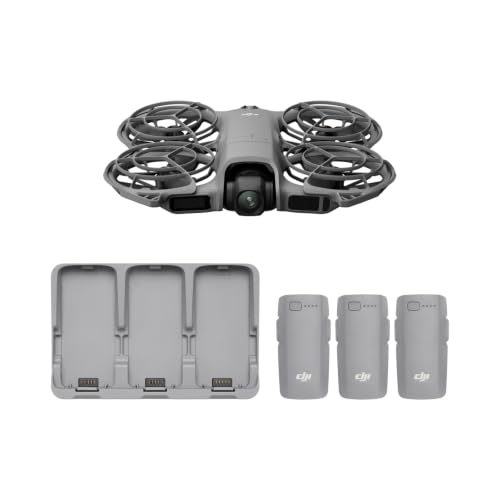
DJI Neo 2 151g 4K Drone
Best for: hands-free 4K tracking and casual vloggers
- Video Resolution
- 4K
- Takeoff Weight
- 151g
- Obstacle Sensing
- Omnidirectional
- Smart Features
- Palm Takeoff
- Dimensions
- 6.74 × 5.8 × 1.59 inches
- Weight
- 5.33 ounces
The DJI Neo 2 is an ultralight camera drone weighing 151 grams. It records in 4K resolution and features omnidirectional obstacle sensing with built-in propeller guards for flight safety. The package includes three batteries and a charging hub. You can control it using hand gestures or palm takeoff, making it suitable for quick solo video captures and tracking.
- Low 151g takeoff weight with C0 certification
- 4K video recording with omnidirectional obstacle sensing
- Palm takeoff, gesture control, and ActiveTrack capability
- Includes three batteries and a dedicated charging hub
- Package does not include a dedicated remote controller
- Android companion app requires manual download outside Google Play
- You want an ultralight 151g drone featuring 4K capture and full propeller guards.
- You prefer launching and operating flights via hand gestures and palm takeoff.
- You require a physical remote controller bundled in the package.
- You are unwilling to install the flight app outside Google Play.
Verdict: DJI Neo 2 4K Palm-Takeoff Drone is built for casual creators and solo travelers who want automated 4K subject tracking and multi-battery flight without carrying a separate controller.

DJI Neo Fly More Combo 4K Drone
Best for: palm-launched vlogging and lightweight travel filming
- Video Resolution
- 4K UHD
- Takeoff Weight
- 135g
- Smart Features
- Palm Takeoff
- Dimensions
- 6.18 × 5.12 × 1.9 inches
- Weight
- 4.76 ounces
The DJI Neo Fly More Combo is an ultralight 135-gram camera drone designed for handheld and autonomous flight. It records in 4K UHD video and handles level-4 winds. The package includes three batteries, an RC-N3 remote controller, and full-coverage propeller guards. You can fly it without a controller via palm takeoff and subject tracking, making it practical for personal vlogging on the move.
- Ultralight 135g takeoff weight requires no FAA registration or Remote ID
- Palm takeoff and landing with controller-free subject tracking
- Includes RC-N3 remote, three batteries, and a two-way charging hub
- Full-coverage propeller guards protect blades during flight
- Wind resistance is limited to level 4
- Lacks a motorized mechanical gimbal
- You want an ultralight drone that launches directly from your hand
- You need multiple control choices including voice, mobile app, and standard RC
- You want extra flight time provided by a three-battery bundle
- You frequently operate in open areas with high winds
- You need mechanical multi-axis gimbal stabilization for your footage
Verdict: DJI Neo Fly More Combo suits solo vloggers and casual travelers who prioritize pocketable 135-gram portability, palm takeoff, and propeller protection over high-wind flight capability.

DJI Mini 3 with DJI RC
Best for: sub-249g travel video and vertical content
- Video Resolution
- 4K HDR
- Takeoff Weight
- Under 249 g
- Flight Time
- 38-Min
- Gimbal Stabilization
- 3-axis mechanical
- Transmission Range
- up to 10 km (32,800 feet)
- Smart Features
- Auto Return
The DJI Mini 3 is a sub-249-gram camera drone built for travel and aerial video. You get a 3-axis mechanical gimbal recording 4K HDR video, true vertical shooting for portrait orientations, and a standard flight time of 38 minutes. It suits pilots wanting long airtime, dedicated screen control, and zero recreational registration requirements.
- Under 249 g takeoff weight requires no recreational FAA registration or Remote ID
- 38-minute flight time on standard battery
- True vertical shooting mode via 3-axis mechanical gimbal
- HD video transmission up to 10 km
- Level 5 wind resistance up to 38 kph
- Intelligent Flight Battery Plus pushes total aircraft weight over 249 g
- Data lists no obstacle sensing or collision avoidance hardware
- You want 4K HDR footage with native vertical capture for portrait displays
- You want to stay under 249 g to fly recreationally without registration
- You prefer a dedicated remote with an integrated display
- You require multi-directional obstacle detection sensors for navigation
- You plan to fly over 249 g regulations when using high-capacity batteries
Verdict: DJI Mini 3 with DJI RC pairs 4K HDR video and 38-minute flight endurance with a dedicated screen remote. It offers dependable flight performance for lightweight travel setups without requiring recreational FAA registration.
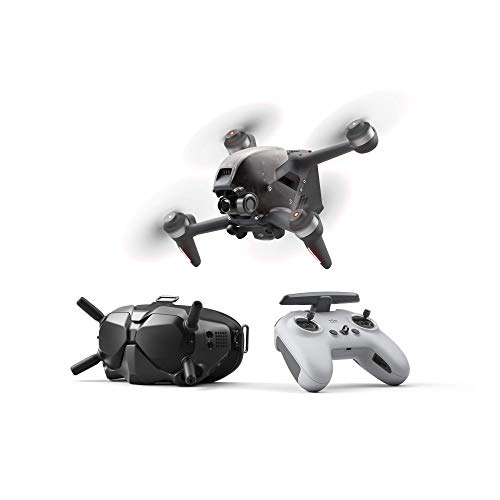
DJI FPV Drone Combo with Goggles
Best for: high-speed first-person view 4K aerial recording
- Video Resolution
- 4K/60fps
- Obstacle Sensing
- Forward and downward
- Transmission Range
- Up to 6.2 miles
- Dimensions
- 12.3 × 10 × 5 inches
- Weight
- 1.75 pounds
The DJI FPV Drone Combo pairs first-person-view flight with 4K recording at 60 frames per second. You get included FPV Goggles V2 with a 150-degree field of view and video transmission reaching up to 6.2 miles through OcuSync 3.0. It suits you if you want high-speed immersive piloting with built-in forward and downward obstacle sensing.
- Captures 4K video at 60fps at up to 120 Mbps
- Includes DJI FPV Goggles V2 with 150-degree field of view
- OcuSync 3.0 provides transmission range up to 6.2 miles
- Hybrid S mode balances manual flight with simplified controls
- Obstacle sensing is limited to forward and downward directions
- Heavier build at 1.75 pounds
- Larger footprint measuring 12.3 by 10 by 5 inches
- You want an immersive first-person flight experience using dedicated goggles.
- You plan to capture fast-moving video at 4K and 60 frames per second.
- You want hybrid flight dynamics combined with return-to-home safety features.
- You require omnidirectional obstacle avoidance sensors.
- You need an ultralight, pocket-sized drone for travel.
Verdict: DJI FPV Drone Combo with Goggles gives high-speed pilots an immersive first-person perspective at 4K/60fps. It fits operators prioritizing cockpit-style goggles and dynamic flight modes over pocketable dimensions.

SKYROVER X1 4K Drone
Best for: Sub-249g flight with 360-degree obstacle sensing
- Video Resolution
- 4K/60fps HDR
- Sensor Size
- 1/1.32" CMOS
- Takeoff Weight
- Under 249g
- Flight Time
- 32 min (96 min total)
- Obstacle Sensing
- 360°
- Gimbal Stabilization
- 3-axis
The SKYROVER X1 is a compact camera drone weighing under 249 grams. It gives you a 1/1.32-inch CMOS sensor with an f/1.7 aperture for 4K HDR video at 60fps and 48MP stills. Omnidirectional 360-degree obstacle sensing and 32 minutes of flight per battery make it a strong match if you want automated safety in a packable frame.
- Omnidirectional 360-degree obstacle sensing and Smart Return to Home
- Captures 4K HDR video at 60fps and 48MP stills with an f/1.7 lens
- Under 249-gram takeoff weight for compact travel
- Three included batteries provide up to 96 minutes of total flight time
- The 1/1.32-inch sensor is smaller than the 1-inch sensors available in this weight class
- No internal storage capacity is listed in the specifications
- You want 360-degree obstacle avoidance in a sub-249g airframe.
- You need 4K recording at 60 frames per second with HDR.
- You want multiple batteries included for up to 96 minutes of total airtime.
- You require a larger 1-inch camera sensor for aerial photography.
- You prefer built-in internal storage rather than relying solely on memory cards.
Verdict: SKYROVER X1 Sub-249g Camera Drone delivers 360-degree obstacle detection and smooth 4K/60fps HDR video in an ultralight design. It suits pilots who want comprehensive flight sensing and multi-battery runtimes without carrying extra weight.

DJI Air 3S Dual-Camera 4K Drone
Best for: low-light dual-camera landscape videography
- Video Resolution
- 4K/60fps HDR
- Sensor Size
- 1″ CMOS
- Flight Time
- 45-min
- Obstacle Sensing
- Omnidirectional
- Transmission Range
- 20km
- Camera Configuration
- Dual Camera
The DJI Air 3S Dual-Camera Drone pairs a 1-inch CMOS wide-angle sensor with a secondary medium telephoto camera. It records 4K HDR video at 60 frames per second and provides up to 45 minutes of flight time. With omnidirectional obstacle sensing powered by forward-facing LiDAR, you get reliable positioning in low-light environments. It suits creators needing telephoto reach and night navigation.
- Primary 1-inch CMOS sensor with 4K/60fps HDR recording
- Dual-camera system featuring a secondary medium tele lens
- Omnidirectional obstacle sensing with forward-facing LiDAR
- Maximum flight time of up to 45 minutes
- Video transmission range reaches up to 20 kilometers
- Battery wall charger is sold separately
- Heavier 1.6-pound weight than compact mini series drones
- You want telephoto and wide-angle focal lengths on one aircraft.
- You need forward LiDAR obstacle detection for low-light conditions.
- You require long flight sessions supported by three included batteries.
- You want a palm-sized craft lighter than 1.6 pounds.
- You require a wall power adapter included in the package.
Verdict: DJI Air 3S Dual-Camera Drone delivers dual focal lengths, 45 minutes of air time, and LiDAR obstacle sensing for demanding shooters. It fits pilots capturing landscape video across varying light conditions who need multi-lens flexibility.
Specifications side by side
| Spec | DJI Mini 4K Fly More Combo | DJI Mini 5 Pro 1-Inch CMOS Drone | DJI Neo 2 151g 4K Drone | DJI Neo Fly More Combo 4K Drone | DJI Mini 3 with DJI RC | DJI FPV Drone Combo with Goggles | SKYROVER X1 4K Drone | DJI Air 3S Dual-Camera 4K Drone |
|---|---|---|---|---|---|---|---|---|
| Video Resolution | 4K Ultra HD | 4K/60fps HDR | 4K | 4K UHD | 4K HDR | 4K/60fps | 4K/60fps HDR | 4K/60fps HDR |
| Sensor Size | – | 1-inch CMOS | – | – | – | – | 1/1.32" CMOS | 1″ CMOS |
| Takeoff Weight | Under 249 g | 249.9 g ± 4 g | 151g | 135g | Under 249 g | – | Under 249g | – |
| Flight Time | 31-min | Up to 36 min | – | – | 38-Min | – | 32 min (96 min total) | 45-min |
| Obstacle Sensing | – | Omnidirectional | Omnidirectional | – | – | Forward and downward | 360° | Omnidirectional |
| Gimbal Stabilization | 3-axis | – | – | – | 3-axis mechanical | – | 3-axis | – |
| Transmission Range | up to 10 km | – | – | – | up to 10 km (32,800 feet) | Up to 6.2 miles | 9.32 miles | 20km |
| Photo Resolution | – | – | – | – | – | – | 48MP | – |
| Stabilization | 3-Axis Gimbal | – | – | – | – | – | – | – |
| Weight Class | Under 249g | – | – | – | – | – | Under 249g | – |
| Camera Configuration | – | – | – | – | – | – | – | Dual Camera |
| Smart Features | Auto Return | – | Palm Takeoff | Palm Takeoff | Auto Return | – | – | – |
| Target Audience | – | Beginners | – | – | – | – | – | – |
| Features | Stabilization | – | – | – | GPS | – | – | – |
| Dimensions | 9.65 × 11.4 × 2.2 inches | 12 × 15 × 3.58 inches | 6.74 × 5.8 × 1.59 inches | 6.18 × 5.12 × 1.9 inches | 9.88 × 14.3 × 2.83 inches | 12.3 × 10 × 5 inches | 5.9 × 3.66 × 2.6 inches | 10.5 × 12.8 × 4.17 inches |
| Weight | 8.47 ounces | 8.78 ounces | 5.33 ounces | 4.76 ounces | 8.75 ounces | 1.75 pounds | 8.78 ounces | 1.6 pounds |
| Color | gray | Grey | Gary | gray | gray | Black | Yellow | gray |
| Model | 6941565980311 | 6937224123090 | 6937224131736 | 6941565988294 | MT3PD | – | – | 6941565989925 |
| Size | – | 7.00 | DJI Neo 2 Fly More Combo (Drone Only) | 6.18 x 5.12 x 1.9 inches | – | 12.3 x 10 x 5 inches | – | 214.19 x 100.63 x 89.17 mm |
If you also need ground footage, you can compare standalone bodies in the mirrorless camera buying guide.
Frequently asked questions
Do you need omnidirectional obstacle sensing on a camera drone?
Omnidirectional obstacle sensing helps you navigate tight areas and automated flight paths safely. Systems on the DJI Mini 5 Pro, DJI Neo 2, SKYROVER X1, and DJI Air 3S detect hazards around the airframe. If you primarily fly high in wide, open skies, basic directional sensors are often sufficient.
What are the advantages of a 1-inch CMOS sensor on a drone?
A 1-inch CMOS sensor offers a larger physical surface to capture light, improving clarity across varied lighting conditions. Drones like the DJI Mini 5 Pro and DJI Air 3S use 1-inch CMOS sensors to record 4K footage. You get cleaner contrast and finer detail than smaller drone sensors produce.
Can you fly a camera drone without a separate remote controller?
You can operate specific compact camera drones entirely without a traditional handheld transmitter. The DJI Neo and DJI Neo 2 feature palm takeoff and automated tracking capabilities. These features allow you to launch the drone directly from your hand, record 4K video, and retrieve the aircraft without extra control hardware.
How does an FPV drone differ from a standard camera drone?
FPV drones emphasize dynamic, manual flight maneuverability viewed directly through head-mounted video goggles. The DJI FPV Drone Combo uses dedicated cockpit goggles for high-speed 4K/60fps capture. Standard camera drones prioritize automated hovering, steady level horizons, and position hold to compose precise landscape or architectural aerial shots.
What are the benefits of a dual-camera drone?
A dual-camera drone offers multiple native focal lengths on a single aircraft without sacrificing visual resolution to digital zoom. The DJI Air 3S includes a dual-camera configuration for flexible framing options. You can switch between broad perspective shots and tighter subject views while maintaining consistent 4K capture across your flight.
Why is a 3-axis mechanical gimbal important on a camera drone?
A 3-axis mechanical gimbal physically stabilizes the camera across pitch, roll, and yaw axes during flight maneuvers. On models like the DJI Mini 4K, this hardware stabilization counters wind tilt and aircraft vibration. It ensures your recorded 4K footage remains smooth and level rather than shaky or tilted.


