7 Best Camera Drones with Palm Takeoff, Compared
Explore 7 hand-launch drones evaluated purely on factory specifications. Compare video resolution, mechanical gimbals, weight classes, and obstacle avoidance features to match your exact aerial recording needs.
As Amazon Associates, we earn from qualifying purchases. This means we may receive a small commission at no extra cost to you if you click through and make a purchase.
As an Amazon Associate we earn from qualifying purchases. Links on this page are affiliate links.
Hand-launching lets you capture quick aerial shots without clearing a landing zone or unpacking extra gear. This guide compares the 7 best camera drones with palm takeoff based on the specifications published on their product listings. The DJI Neo 2 151g 4K Drone leads because it combines 4K video capture with omnidirectional obstacle sensing in a 5.33-ounce airframe.
Use this comparison to choose the right balance of video resolution, obstacle safety, and controller hardware for your filming needs.
Compare obstacle sensing and gimbal stabilization
Palm takeoff models split between obstacle protection and camera stabilization. The DJI Neo 2 includes omnidirectional obstacle sensing for automated tracking. The DJI Flip provides a 3-axis gimbal for mechanically stabilized 4K capture. If you fly near obstacles, prioritize sensing; if you want smooth video, choose a motorized gimbal.
| # | Product | Best for | Price |
|---|---|---|---|
| 1 | DJI Neo 2 151g 4K Drone Best overall | automated palm launches and close-range tracking | |
| 2 | DJI Neo Fly More Combo 4K Drone Best budget | portable palm-launch vlogging and quick tracking | |
| 3 | DJI Flip Drone with RC 2 Controller Best premium | palm takeoff with a built-in screen controller | |
| 4 | HOVERAir X1 Self-Flying Camera Drone Also great | hands-free sports tracking and automated vlogging | |
| 5 | DJI Neo 2 Fly More Combo Drone Best travel | Travel vloggers needing palm takeoff and sensing | |
| 6 | DJI Neo 2 4K Drone with Guards Also great | Solo vloggers wanting hand-launched 4K tracking | |
| 7 | DJI Flip 4K Drone with RC 2 Screen Remote Also great | Longer palm flights with dedicated screen control |
The best fit for you
- You need palm takeoff with omnidirectional obstacle sensing – DJI Neo 2 151g 4K Drone – It provides omnidirectional obstacle sensing alongside 4K video capture.
- You want palm takeoff with three-axis gimbal stabilization – DJI Flip Drone with RC 2 Controller – It features a 3-axis gimbal and an under-249g design.
- You want the lightest drone for automated tracking – HOVERAir X1 Self-Flying Camera Drone – It weighs 4.41 ounces and includes follow me functionality.
Is Palm Takeoff Worth It for Your Flying Needs?
Palm takeoff allows an aerial camera to lift directly off your hand to begin tracking and recording. Ultralight designs like the 4.41-ounce HOVERAir X1 and 135-gram DJI Neo enable rapid operation when uneven terrain prevents ground takeoffs. Choosing this feature means relying on automated flight modes and compact airframes for solo vlogging, though select options such as the DJI Flip also support dedicated screen remotes.
Worth it if
- You want to launch automated tracking flights directly from your hand without finding level ground.
- You prioritize lightweight drones under 249 grams for fast solo recording and vlogging.
Skip it if
- You prioritize traditional dual-stick flight setups over automated hand-launch routines.
- You prefer taking off exclusively from stationary ground positions using standard remotes.
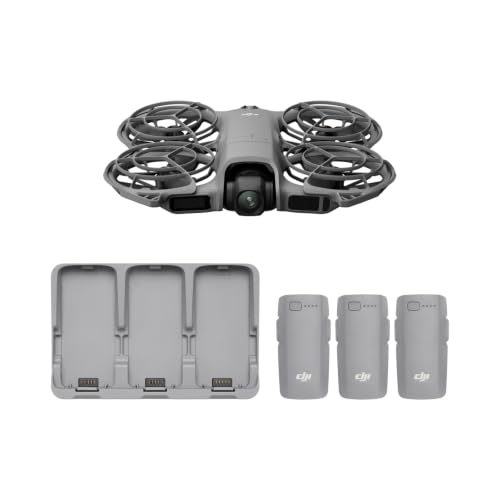
DJI Neo 2 151g 4K Drone
Best for: automated palm launches and close-range tracking
- Smart Features
- Palm Takeoff
- Video Resolution
- 4K
- Takeoff Weight
- 151g
- Obstacle Sensing
- Omnidirectional
- Dimensions
- 6.74 × 5.8 × 1.59 inches
- Weight
- 5.33 ounces
The DJI Neo 2 is an ultralight drone designed for quick, controller-free flights. At 151 grams, it provides direct palm takeoff and landing alongside gesture controls and 4K video capture. Omnidirectional obstacle sensing and enclosed propeller guards protect the craft during close-range tracking. It suits you if you want automated solo recordings without packing a standard remote controller.
- Supports palm takeoff, landing, and gesture control
- Omnidirectional obstacle sensing with full propeller guards
- Ultralight 151 g takeoff weight with C0 certification
- Includes three batteries and a charging hub
- Captures video in 4K resolution
- Package does not include a dedicated remote controller
- DJI Fly app requires direct download from DJI rather than Google Play
- You want hands-free palm launch and gesture controls for self-recording.
- You need omnidirectional obstacle sensing on a sub-250 g craft.
- You want multiple flight batteries and a charging hub in the box.
- You want a physical handheld remote controller included in the package.
- You prefer installing your flight apps directly from Google Play.
Verdict: DJI Neo 2 4K Palm Takeoff Drone fits creators who need instant palm launches, 4K video, and full omnidirectional obstacle protection without carrying extra remote hardware.

DJI Neo Fly More Combo 4K Drone
Best for: portable palm-launch vlogging and quick tracking
- Smart Features
- Palm Takeoff
- Video Resolution
- 4K UHD
- Takeoff Weight
- 135g
- Dimensions
- 6.18 × 5.12 × 1.9 inches
- Weight
- 4.76 ounces
DJI Neo Fly More Combo is an ultralight drone built for quick aerial clips. At 135g, it supports push-button palm takeoff and landing without an external remote. You get 4K UHD video recording, full-coverage propeller guards, and level-4 wind resistance. The package includes an RC-N3 controller, three batteries, and a two-way charging hub for extended filming sessions.
- 135g takeoff weight exempt from FAA registration
- One-button palm takeoff and landing
- Captures 4K UHD video with electronic stabilization
- Includes 3 batteries, two-way charging hub, and RC-N3 controller
- Built-in full-coverage propeller guards
- Wind resistance capped at level 4
- Voice control limited to English and Chinese
- You want controller-free palm launches for fast video capture.
- You need a sub-250g aircraft that bypasses FAA registration and Remote ID.
- You want multiple swappable batteries and a dedicated hub for continuous shooting.
- You need to operate in winds stronger than level 4.
- You require voice navigation commands in languages other than English or Chinese.
Verdict: DJI Neo Fly More Combo 4K Drone delivers automated palm launches, 4K video, and three flight batteries in an ultralight 135g package.

DJI Flip Drone with RC 2 Controller
Best for: palm takeoff with a built-in screen controller
- Smart Features
- Follow Me, Palm Takeoff
- Video Resolution
- 4K/60fps HDR
- Sensor Size
- 1/1.3-inch CMOS
- Takeoff Weight
- Under 249 g
- Flight Time
- 31-Min
- Gimbal Stabilization
- 3-Axis
The DJI Flip is an under-249 g drone featuring palm takeoff, a 1/1.3-inch CMOS sensor, and a 3-axis gimbal. It captures 4K video at 60 fps in HDR and stays airborne for up to 31 minutes. The bundled RC 2 controller includes a built-in screen, giving you dedicated flight controls without mounting your smartphone.
- 1/1.3-inch CMOS sensor captures 4K video at 60 fps HDR
- Max flight time of 31 minutes per charge
- RC 2 remote controller features an integrated display
- Sub-249 g takeoff weight requires no FAA registration
- Package includes only one flight battery
- Android users must sideload the DJI Fly app from the official website instead of Google Play
- You want palm takeoff paired with a dedicated screen remote instead of a phone
- You need 4K 60 fps video on a sub-249 g drone with up to 31 minutes of flight
- You want multiple batteries included in the package without purchasing extra bundles
- You prefer installing flight apps directly through Google Play
Verdict: DJI Flip with RC 2 Controller delivers palm takeoff and 4K HDR capture with an integrated display remote for pilots seeking standalone controls. It suits creators who want extended flight times and mechanical stabilization in an under-249 g airframe.

HOVERAir X1 Self-Flying Camera Drone
Best for: hands-free sports tracking and automated vlogging
- Smart Features
- Follow Me, Palm Takeoff
- Video Resolution
- 2.7K@30fps, 1080P HDR
- Flight Time
- 11 minutes
- Dimensions
- 5 × 5.71 × 1.18 inches
- Weight
- 4.41 ounces
The HOVERAir X1 is a 4.41-ounce palm-takeoff drone built for hands-free video capture. It tracks your movement at speeds up to 15 mph using automated flight paths like Follow and Orbit. You record up to 2.7K at 30 fps straight to 32GB of internal storage, supported by an 11-minute maximum flight time.
- Weighs 4.41 ounces with fully enclosed safety guards
- Built-in 32GB internal storage removes the need for memory cards
- Automated flight modes include Follow, Orbit, Zoom Out, and Bird's Eye
- Follow-me mode tracks movement at speeds up to 15 mph
- Caps video resolution at 2.7K at 30 fps rather than 4K
- Flight time is limited to 11 minutes per battery charge
- You want hands-free automated tracking up to 15 mph without carrying a controller.
- You prefer built-in internal storage over handling separate microSD cards.
- You need native 4K video recording for your footage.
- You require flight sessions longer than 11 minutes on one battery.
Verdict: HOVERAir X1 Foldable Mini Drone suits solo vloggers and cyclists who prioritize enclosed propeller safety and automated palm launches over 4K recording resolution.

DJI Neo 2 Fly More Combo Drone
Best for: Travel vloggers needing palm takeoff and sensing
- Smart Features
- Palm Takeoff
- Video Resolution
- 4K at 60 fps, 4K at 100 fps
- Flight Time
- 19 min per battery
- Obstacle Sensing
- Omnidirectional
- Gimbal Stabilization
- 2-axis with EIS
- Transmission Range
- Up to 6.2 miles
The DJI Neo 2 Fly More Combo is a compact drone built for travel and hand launching. You get palm takeoff, 4K video recording up to 60 fps, and omnidirectional obstacle sensing powered by LiDAR and vision sensors. Each battery yields 19 minutes of flight time. This kit suits you if you want a complete travel bundle.
- Supports palm takeoff, gestures, mobile app, and RC-N3 remote control
- Omnidirectional obstacle sensing uses LiDAR, vision, and infrared sensors
- Records 4K video at 60 fps and slow motion at 100 fps
- Transmission range reaches up to 6.2 miles with the included remote
- Camera stabilization relies on a 2-axis gimbal instead of 3-axis
- Flight time caps at 19 minutes per battery
- You want palm takeoff paired with omnidirectional obstacle avoidance.
- You need 4K capture at high frame rates up to 60 fps or 100 fps.
- You want an all-in-one travel package with a dedicated backpack and controller.
- You require a 3-axis mechanical gimbal for video stabilization.
- You need more than 19 minutes of flight on a single battery.
Verdict: DJI Neo 2 Fly More Combo fits travelers who want reliable palm launching with omnidirectional obstacle protection. It delivers 4K60 video and multiple control methods in a packaged travel setup.

DJI Neo 2 4K Drone with Guards
Best for: Solo vloggers wanting hand-launched 4K tracking
- Smart Features
- Palm Takeoff
- Video Resolution
- 4K
- Takeoff Weight
- 151g
- Obstacle Sensing
- Omnidirectional
- Dimensions
- 6.74 × 5.8 × 1.59 inches
- Weight
- 5.33 ounces
The DJI Neo 2 is a compact 151-gram camera drone configured for hand launches and automated flight. It features palm takeoff and landing, gesture control, and omnidirectional obstacle sensing paired with a 4K camera. Built-in propeller guards and external bumper hardware protect the airframe, making it well suited if you want fast hand deployments without carrying standard flight controllers.
- Omnidirectional obstacle sensing
- Palm takeoff, landing, and gesture control
- Lightweight 151g takeoff weight with C0 certification
- Records video in 4K resolution
- Bundle includes gimbal bumper, propeller guards, and lighted landing gear
- Package includes only one battery
- No standalone remote controller included in the box
- DJI Fly app requires direct download from the DJI website on Android
- You want an ultra-lightweight drone that launches and lands on your hand.
- You rely on omnidirectional obstacle sensing to navigate automated flight paths safely.
- You want to control tracking or view feeds via an Apple Watch.
- You require a physical transmitter remote included in the package.
- You need multiple batteries for extended flight outings without recharging.
- You prefer installing drone companion apps directly from the Google Play Store.
Verdict: DJI Neo 2 4K Palm-Takeoff Drone gives solo creators a 151-gram aerial camera with full omnidirectional sensing and direct palm operation. It delivers quick automated 4K capture for vloggers who prioritize fast hand launch over traditional dual-stick flight setups.

DJI Flip 4K Drone with RC 2 Screen Remote
Best for: Longer palm flights with dedicated screen control
- Smart Features
- Follow Me, Palm Takeoff
- Video Resolution
- 4K UHD
- Sensor Size
- 1/1.3-inch CMOS
- Takeoff Weight
- Under 249g
- Flight Time
- 31 minutes
- Gimbal Stabilization
- 3-Axis
The DJI Flip combines palm takeoff with an RC 2 screen remote controller and an 8.8-ounce takeoff weight. Its 1/1.3-inch CMOS sensor records 4K video at 60 fps with 3-axis mechanical stabilization. With a 31-minute maximum flight time and full-coverage carbon fiber propeller guards, you get extended flight endurance and built-in rotor protection for close-range launching.
- 31-minute maximum flight time
- 1/1.3-inch CMOS sensor with 4K/60fps HDR video capture
- 3-axis mechanical gimbal stabilization
- Full-coverage carbon fiber propeller guards
- Comes with RC 2 integrated screen remote controller
- Includes only one flight battery in the bundle
- Larger 11-inch frame than pocket-sized palm-launch alternatives
- You want palm launching with a dedicated display remote instead of a phone.
- You require extended flight sessions up to 31 minutes per battery.
- You need full-coverage propeller guarding for safer handling.
- You want multiple flight batteries included in the package.
- You prefer a pocket-sized frame under 9 inches wide.
Verdict: DJI Flip Drone with RC 2 Controller delivers 31 minutes of 4K stabilized video and safe palm launching for creators who prefer dedicated screen control over phone-only operation.
Specifications side by side
| Spec | DJI Neo 2 151g 4K Drone | DJI Neo Fly More Combo 4K Drone | DJI Flip Drone with RC 2 Controller | HOVERAir X1 Self-Flying Camera Drone | DJI Neo 2 Fly More Combo Drone | DJI Neo 2 4K Drone with Guards | DJI Flip 4K Drone with RC 2 Screen Remote |
|---|---|---|---|---|---|---|---|
| Video Resolution | 4K | 4K UHD | 4K/60fps HDR | 2.7K@30fps, 1080P HDR | 4K at 60 fps, 4K at 100 fps | 4K | 4K UHD |
| Sensor Size | – | – | 1/1.3-inch CMOS | – | – | – | 1/1.3-inch CMOS |
| Takeoff Weight | 151g | 135g | Under 249 g | – | – | 151g | Under 249g |
| Flight Time | – | – | 31-Min | 11 minutes | 19 min per battery | – | 31 minutes |
| Obstacle Sensing | Omnidirectional | – | – | – | Omnidirectional | Omnidirectional | – |
| Gimbal Stabilization | – | – | 3-Axis | – | 2-axis with EIS | – | 3-Axis |
| Transmission Range | – | – | 44000ft/13km | – | Up to 6.2 miles | – | – |
| Stabilization | – | – | 3-Axis Gimbal | – | – | – | 3-Axis Gimbal |
| Weight Class | – | – | Under 249g | – | – | – | Under 249g |
| Smart Features | Palm Takeoff | Palm Takeoff | Follow Me, Palm Takeoff | Follow Me, Palm Takeoff | Palm Takeoff | Palm Takeoff | Follow Me, Palm Takeoff |
| Target Audience | – | – | – | – | Travel | – | – |
| Features | – | – | Stabilization | – | – | – | Stabilization |
| Recommended Use | – | – | – | – | Vlogging | – | – |
| Dimensions | 6.74 × 5.8 × 1.59 inches | 6.18 × 5.12 × 1.9 inches | 11 × 9.2 × 3.1 inches | 5 × 5.71 × 1.18 inches | 7.6 × 10 × 3.8 inches | 6.74 × 5.8 × 1.59 inches | 11 × 9.17 × 3.11 inches |
| Weight | 5.33 ounces | 4.76 ounces | 1.63 pounds | 4.41 ounces | 3.77 pounds | 5.33 ounces | 8.8 ounces |
| Size | DJI Neo 2 Fly More Combo (Drone Only) | 6.18 x 5.12 x 1.9 inches | DJI Flip (RC 2) | Combo | – | – | – |
| Color | Gary | gray | Gray | Black | Gray | Gary | Gray |
| Model | 6937224131736 | 6941565988294 | 6941565994004 | X1 edition | CP.FP.00000272.06_AH16_1 | – | E1DJIFLIPRC2 |
If you prioritize payload capacity over compact size, evaluate specs for the best fishing drones with 4K Camera.
How We Picked These Drones
You find drones here by checking published Amazon listings for palm takeoff in product titles or feature lists. We do not test or physically handle products. All specifications come directly from manufacturer listings. Only one variant per product family appears on the list.
Products are ordered with in-stock items first, then by Amazon sales rank, with better-selling products first. We compare published specifications, including 4K video resolution, omnidirectional obstacle sensing, 3-axis gimbal stabilization, and weight class under 249 grams. Live prices and stock refresh daily on the page.
How to Choose a Palm Takeoff Drone
Video Recording Resolution
Check what resolution the camera supports before buying. If you plan to crop your footage or view recordings on larger monitors, look for 4K video recording. Standard resolution works for basic social sharing on phones, but 4K preserves fine detail during motion. For example, the DJI Neo 2 captures video in 4K resolution, which gives you crisp hand-launched clips right from takeoff.
Dedicated Remote Controller Options
Consider how you intend to steer the drone once it leaves your hand. Some palm-launch models operate entirely through automated presets or smartphone connections, which keeps your kit minimal. Other models include a dedicated transmitter with an integrated display. If you want tactile sticks and an independent view without tying up your phone, choose an option like the DJI Flip with the RC 2 controller.
Automated Follow Me Tracking
Look for dedicated tracking capabilities if you plan to record outdoor activities hands-free. Drones with automated follow modes detect your movement and adjust flight direction dynamically. This keeps you centered in the frame while running, walking, or riding. If your primary goal is recording solo movement without holding a controller, check that the specifications explicitly list Follow Me functionality, as seen on the HOVERAir X1.
Airframe Weight Classification
Examine the listed airframe weight before selecting your palm-launch drone. Lighter designs are easier to transport in a pocket or daypack, but weight also affects flight category classifications. Models listed under 249 grams meet specific lightweight regulatory brackets in many regions. Check the exact ounce or gram specification to confirm how portable the device is. For instance, the DJI Neo weighs just 4.76 ounces.
Battery Bundles and Runtime
Check whether the package includes spare flight batteries. Hand-launched drones feature compact airframes that use smaller battery packs, which limits single-flight durations. If you travel frequently or shoot multiple clips throughout the day, a single battery may interrupt your recording. Buying a combo package provides multiple packs and multi-battery chargers. For example, the DJI Neo 2 Fly More Combo supplies extra batteries for uninterrupted vlogging sessions.
Frequently asked questions
How does palm takeoff work on a camera drone?
You place the drone flat on your open hand and initiate launch via a dedicated button or voice prompt. Optical or downward sensors identify your palm before the motors spin up to hover. The HOVERAir X1 and DJI Neo series use direct palm launching to let you record quickly without setting up landing pads.
Do you need a separate remote controller to use palm takeoff?
No, you can operate several palm-takeoff drones entirely without a standard remote controller. Models like the DJI Neo and HOVERAir X1 support autonomous flying modes right from your hand. However, options like the DJI Flip include the RC 2 controller with a built-in screen if you prefer dedicated manual sticks alongside palm functionality.
Which palm takeoff drone has omnidirectional obstacle sensing?
The DJI Neo 2 includes omnidirectional obstacle sensing to monitor surroundings while launching and following subjects. This comprehensive sensor array detects potential collisions in multiple directions during flight. In contrast, smaller alternatives like the HOVERAir X1 use enclosed propeller designs to protect against accidental contact without complex multi-directional sensor packages.
Are palm takeoff drones light enough to avoid registration rules?
Yes, many palm takeoff models fall into ultralight weight brackets. The DJI Flip sits in the under-249g class, weighing 8.8 ounces for its standalone aircraft package. The DJI Neo weighs 4.76 ounces (135 grams), and the HOVERAir X1 measures only 4.41 ounces, keeping both well below typical weight thresholds.
Can drones with palm takeoff record in 4K resolution?
Yes, several palm-launch drones support high-resolution 4K capture. The DJI Neo, DJI Neo 2, and DJI Flip all record in 4K video, with the DJI Neo 2 reaching 4K60. If you choose the HOVERAir X1, it prioritizes enclosed safety and automated follow modes rather than offering 4K video capture.
How long do palm takeoff camera drones fly on a single charge?
Flight times vary depending on aircraft size and battery capacity. For instance, the DJI Flip delivers up to 31 minutes of flight time while offering palm launch capabilities. Smaller vlogging drones typically provide shorter single-session runtimes, though bundles like the DJI Neo Fly More Combo supply three batteries for extended shooting sessions.
What tracking features work with palm takeoff drones?
Most palm-launch models include automated Follow Me tracking to follow you hands-free after leaving your hand. The HOVERAir X1 and DJI Flip both list Follow Me features for keeping you centered in frame. The DJI Neo 2 pairs palm takeoff with tracking and omnidirectional obstacle sensing to stay safe in close quarters.


