15 Best Camera Drones with Omnidirectional Obstacle Sensing, Compared
Compare 15 camera drones with omnidirectional obstacle sensing. We rank models by published specs, focusing on sensor size and safety features for your needs.
As Amazon Associates, we earn from qualifying purchases. This means we may receive a small commission at no extra cost to you if you click through and make a purchase.
As an Amazon Associate we earn from qualifying purchases. Links on this page are affiliate links.
Choosing the best camera drones with omnidirectional obstacle sensing requires comparing specific safety and imaging specs. We analyzed 15 models ranked by their published listing data. The DJI Mini 5 Pro leads because it combines a 1-Inch CMOS sensor with full 360-degree avoidance under 250 grams. This guide helps you decide which drone fits your weight class, sensor needs, and remote preferences.
Check the sensor size for image quality
Omnidirectional sensing is standard across this list, so focus on the camera sensor. The DJI Mini 5 Pro and Air 3S use a 1-Inch CMOS sensor for better low-light performance. Other models like the DJI Neo 2 lack a specified sensor size, often indicating a smaller component. Choose the 1-Inch models if you prioritize video clarity over the lowest possible weight.
| # | Product | Best for | Price |
|---|---|---|---|
| 1 | DJI Mini 5 Pro 1-Inch CMOS Drone Best overall | all-around obstacle sensing under 250 grams | |
| 2 | DJI Neo 2 151g 4K Drone Also great | hands-free 4K tracking and ultralight travel | |
| 3 | SKYROVER X1 4K Drone Also great | travelers wanting lightweight 360-degree obstacle sensing | |
| 4 | DJI Air 3S Dual-Camera 4K Drone Best premium | low-light navigation and dual-lens aerial video | |
| 5 | DJI Mini 5 Pro Drone with RC 2 Also great | Sub-249g travel filming with omnidirectional sensing | |
| 6 | DJI Mini 5 Pro Drone with RC 2 Remote Also great | obstacle-aware 4K filming with integrated display | |
| 7 | DJI Neo 2 4K Drone with Guards Also great | Beginners seeking portable safety | |
| 8 | KUNRUN Under 249g GPS 4K Drone Best budget | screen-remote flying under 249 grams | |
| 9 | GXTDL Ultralight Drone with Screen Controller Also great | sub-249g obstacle sensing with included screen remote | |
| 10 | DCX Volo X 4K LiDAR Drone Also great | Long flights without geofencing limits | |
| 11 | DJI Air 3S Dual-Camera Drone Also great | Low-light travel photography with dual focal lengths | |
| 12 | DJI Mini 4 Pro Drone with RC 2 Also great | Sub-249g travel with complete obstacle coverage | |
| 13 | Appresso 4K Drone with 7.2-Inch Screen Remote Best 3-axis gimbal | pilots wanting a large built-in tablet controller | |
| 14 | DJI Mavic 3 Classic 4/3 CMOS Drone Best 4/3 cmos | large-sensor 5.1K video capture and long flights | |
| 15 | DJI Air 3 Dual-Camera Drone Also great | long flights requiring dual camera angles |
The best fit for you
- You need full-surround safety under 250 grams – DJI Mini 5 Pro 1-Inch CMOS Drone – It provides LiDAR-assisted omnidirectional avoidance while weighing 8.78 ounces.
- You want hands-free control via gestures or watch – DJI Neo 2 151g 4K Drone – It features palm takeoff and weighs only 5.33 ounces.
- You require low-light navigation with dual lenses – DJI Air 3S Dual-Camera 4K Drone – It uses LiDAR detection and a dual-camera setup for 4K video.
- You prefer flying without a smartphone display – KUNRUN Under 249g GPS 4K Drone – It includes a screen-equipped remote and stays under 249 grams.
Is Omnidirectional Obstacle Sensing Worth It for Your Flights?
This feature detects objects in all directions, helping the drone avoid collisions automatically. You get safety during complex maneuvers or tight spaces. Models like the DJI Mini 5 Pro and Air 3S use LiDAR for precise detection in low light. The DJI Neo 2 offers this in a lightweight 151-gram body. It adds a layer of protection for beginners or travelers who need reliable safeguards without bulky equipment.
Worth it if
- You fly in cluttered environments with trees or buildings
- You are a beginner who wants automated collision avoidance
- You need low-light navigation using LiDAR technology
Skip it if
- You only fly in wide open fields with no obstacles
- You prefer manual control without automated braking
- You want the absolute lightest drone possible under 100 grams

DJI Mini 5 Pro 1-Inch CMOS Drone
Best for: all-around obstacle sensing under 250 grams
- Obstacle Sensing
- Omnidirectional Obstacle Sensing
- Video Resolution
- 4K/60fps HDR
- Sensor Size
- 1-inch CMOS
- Takeoff Weight
- 249.9 g ± 4 g
- Flight Time
- Up to 36 min
- Target Audience
- Beginners
This compact folding drone pairs a 1-inch CMOS sensor with omnidirectional obstacle sensing powered by forward LiDAR and vision sensors. Weighing under 250 grams, it captures 4K HDR footage at 60 frames per second and flies for up to 36 minutes per battery. It suits you if you need full spherical obstacle detection and high video quality in a lightweight travel setup.
- Nightscape omnidirectional obstacle sensing with forward LiDAR and vision sensors
- 1-inch CMOS sensor recording 4K HDR video at 60 fps
- Lightweight takeoff weight of 249.9 g ± 4 g
- Internal onboard storage of 42GB
- DJI RC-N3 controller requires mounting your own smartphone for monitoring
- DJI Fly app requires manual download from DJI rather than Google Play
- You want full omnidirectional sensing and LiDAR assistance in a sub-250g drone.
- You need a 1-inch sensor capable of 4K 60fps HDR video.
- You want an included package with three batteries, a charging hub, and ND filters.
- You prefer a remote controller with an integrated display screen.
- You want to install your drone management software directly via Google Play.
Verdict: DJI Mini 5 Pro with RC-N3 provides LiDAR-assisted omnidirectional avoidance and 4K HDR capture for pilots who want full-surround safety under 250 grams.
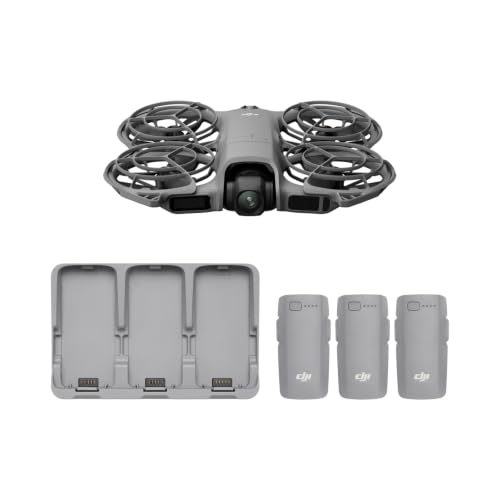
DJI Neo 2 151g 4K Drone
Best for: hands-free 4K tracking and ultralight travel
- Obstacle Sensing
- Omnidirectional Obstacle Sensing
- Video Resolution
- 4K
- Takeoff Weight
- 151g
- Smart Features
- Palm Takeoff
- Dimensions
- 6.74 × 5.8 × 1.59 inches
- Weight
- 5.33 ounces
The DJI Neo 2 is an ultralight 151-gram drone featuring omnidirectional obstacle sensing and 4K video recording. It includes full-coverage propeller guards, three batteries, a charging hub, and hands-free palm takeoff with gesture controls. If you want automated subject tracking via ActiveTrack and complete multi-directional sensing without carrying a heavy frame or standalone remote, this setup fits you.
- Omnidirectional obstacle sensing system
- Ultralight 151g takeoff weight with C0 certification
- Three batteries and a charging hub included
- Palm takeoff, landing, and gesture control support
- Does not include a dedicated remote controller
- Requires manual DJI Fly app installation on Android outside Google Play
- You want hands-free operation using palm launch and gesture controls.
- You need an ultralight 151-gram airframe with omnidirectional obstacle sensing.
- You want extended flight sessions using three modular batteries and a hub.
- You want a physical hardware controller supplied in the box.
- You prefer installing flight apps directly through Google Play on Android.
Verdict: DJI Neo 2 Fly More Combo (Drone Only) delivers omnidirectional sensing and 4K capture for pilots wanting a 151-gram flyer controlled via gestures, phone, or smart watch.

SKYROVER X1 4K Drone
Best for: travelers wanting lightweight 360-degree obstacle sensing
- Obstacle Sensing
- Omnidirectional Obstacle Sensing
- Video Resolution
- 4K/60fps HDR
- Sensor Size
- 1/1.32" CMOS
- Takeoff Weight
- Under 249g
- Flight Time
- 32 min (96 min total)
- Gimbal Stabilization
- 3-axis
The SKYROVER X1 is an ultralight folding camera drone weighing under 249 grams. For navigating tight spaces, it includes 360-degree obstacle sensing alongside a 3-axis gimbal. Its camera uses a 1/1.32-inch sensor recording 4K video at 60 frames per second. This setup suits travelers and hikers who need full-surround detection without carrying a heavy, full-sized quadcopter.
- Omnidirectional 360-degree obstacle sensing and Smart Return to Home
- Sub-249g takeoff weight for compact travel
- 1/1.32-inch CMOS sensor with f/1.7 aperture and 4K/60fps HDR video
- Up to 32 minutes flight time per battery and 96 minutes total with three batteries
- 9.32-mile SkyBridge video transmission with 1080p/60fps live view
- 1/1.32-inch sensor is smaller than 1-inch or 4/3-inch alternatives
- 32-minute single-battery flight rating is shorter than heavier multi-rotor platforms
- You want full 360-degree obstacle avoidance in an under-249g airframe.
- You need 4K/60fps HDR video recording alongside automated subject tracking.
- You prefer carrying multiple batteries for up to 96 minutes of total flight session time.
- You require a larger 1-inch or 4/3-inch image sensor for low-light capture.
- You want dual optical cameras with a dedicated telephoto lens.
Verdict: SKYROVER X1 Omnidirectional 4K Drone provides full 360-degree sensing and high-frame-rate 4K capture in a sub-249g package for traveling creators. It gives you multi-directional tracking and triple-battery endurance without the bulk of larger flight rigs.

DJI Air 3S Dual-Camera 4K Drone
Best for: low-light navigation and dual-lens aerial video
- Obstacle Sensing
- Omnidirectional Obstacle Sensing
- Video Resolution
- 4K/60fps HDR
- Sensor Size
- 1″ CMOS
- Flight Time
- 45-min
- Transmission Range
- 20km
- Camera Configuration
- Dual Camera
The DJI Air 3S Fly More Combo pairs a 1-inch CMOS primary wide-angle camera with a medium telephoto lens and omnidirectional obstacle sensing upgraded with forward-facing LiDAR. You get up to 45 minutes of flight time, 20km video transmission, and 4K/60fps HDR video recording. It suits pilots needing extensive range, night-sensing coverage, and multiple focal lengths for detailed outdoor captures.
- Omnidirectional obstacle sensing includes forward-facing LiDAR for nighttime flight
- Dual-camera system featuring a 1-inch CMOS wide-angle and medium telephoto lens
- Maximum flight time of 45 minutes per charge with three included batteries
- Records 4K/60fps HDR video with up to 14 stops of dynamic range
- Weighs 1.6 pounds, well above ultralight sub-250g weight classes
- Wall battery charger is not included in the box and must be acquired separately
- Supplied DJI RC-N3 controller lacks an integrated display screen
- You want dual focal lengths with a 1-inch primary sensor for 4K/60fps HDR recording
- You fly in dim lighting and need LiDAR-assisted omnidirectional obstacle detection
- You need long endurance supported by three batteries providing up to 45 minutes each
- You prioritize a sub-249g ultralight drone for travel
- You want a remote controller with a built-in monitor
- You expect an out-of-the-box wall charging plug to be supplied
Verdict: DJI Air 3S Fly More Combo (RC-N3) suits aerial creators who require dual-camera flexibility, low-light LiDAR obstacle detection, and extended multi-battery flight sessions.

DJI Mini 5 Pro Drone with RC 2
Best for: Sub-249g travel filming with omnidirectional sensing
- Obstacle Sensing
- Omnidirectional Obstacle Sensing
- Video Resolution
- 4K/60fps HDR
- Sensor Size
- 1-inch CMOS
- Takeoff Weight
- less than 249 grams
- Photo Resolution
- 50MP
- Dimensions
- 15 × 12 × 3.58 inches
The DJI Mini 5 Pro pairs omnidirectional obstacle sensing with front-facing LiDAR and vision sensors to track hazards around the airframe. It features a 1-inch CMOS sensor recording 4K/60fps HDR video, 42GB of onboard storage, and a takeoff weight under 249 grams. This setup suits you if you want full-surround detection without exceeding standard sub-250-gram registration thresholds.
- Omnidirectional obstacle sensing using vision sensors and front-facing LiDAR
- Sub-249-gram takeoff weight keeps the airframe lightweight and portable
- 1-inch CMOS sensor captures 50MP photos and 4K/60fps HDR video
- Includes 42GB of built-in storage alongside a bundled 128GB microSD card
- Single-camera design lacks a dedicated secondary telephoto lens
- Video recording caps at 60fps in 4K resolution
- You want complete omnidirectional obstacle coverage in a sub-249-gram airframe.
- You prefer flying with an integrated screen controller rather than mounting a smartphone.
- You shoot vertical content using hardware-driven 225-degree gimbal rotation.
- You need a multi-camera array with alternate optical focal lengths.
- You require 4K slow-motion frame rates higher than 60fps.
Verdict: DJI Mini 5 Pro with RC 2 Screen Remote delivers complete omnidirectional sensing and 1-inch sensor imaging for travelers who need to stay under 249 grams. It gives outdoor creators dedicated display control and LiDAR-assisted navigation in a compact folding footprint.

DJI Mini 5 Pro Drone with RC 2 Remote
Best for: obstacle-aware 4K filming with integrated display
- Obstacle Sensing
- Omnidirectional Obstacle Sensing
- Video Resolution
- 4K/60fps HDR
- Sensor Size
- 1-Inch CMOS
- Gimbal Stabilization
- 225° Flexible Gimbal
- Dimensions
- 6.2 × 5.1 × 1.9 inches
This compact drone kit includes the DJI Mini 5 Pro and the DJI RC 2 remote with a built-in display. You get omnidirectional obstacle sensing using LiDAR and vision sensors for day and night navigation, paired with a 1-inch CMOS sensor recording 4K/60fps HDR video. It suits creators needing dedicated controller monitoring and 360-degree detection.
- Omnidirectional obstacle sensing with LiDAR and vision sensors
- 1-inch CMOS sensor supporting 4K/60fps HDR recording
- DJI RC 2 controller with built-in display screen
- Gimbal supports 225° roll rotation and true vertical filming
- Includes three flight batteries, charging hub, and ND filters
- Video resolution caps at 4K/60fps without 5.1K or 8K recording options
- Single-camera setup lacks an integrated telephoto lens
- You want omnidirectional sensing powered by LiDAR for low-light flights.
- You need native vertical video recording for social formats alongside 4K/60fps HDR.
- You prefer a remote with an integrated display rather than mounting your smartphone.
- You require video capture resolutions above 4K.
- You need a dual-camera system with a dedicated telephoto focal length.
Verdict: DJI Mini 5 Pro Drone with RC 2 Remote delivers comprehensive omnidirectional obstacle sensing and 1-inch sensor imaging for pilots who want integrated screen control without mounting a smartphone. The bundle supplies three batteries and vertical filming hardware for extended social video workflows.

DJI Neo 2 4K Drone with Guards
Best for: Beginners seeking portable safety
- Obstacle Sensing
- Omnidirectional Obstacle Sensing
- Video Resolution
- 4K
- Takeoff Weight
- 151g
- Smart Features
- Palm Takeoff
- Dimensions
- 6.74 × 5.8 × 1.59 inches
- Weight
- 5.33 ounces
The DJI Neo 2 is a compact drone weighing 151g, designed for easy portability and safe flight. It features omnidirectional obstacle sensing to protect against collisions from all angles. You can capture video in 4K resolution, providing clear imagery for your projects. The drone supports palm takeoff and landing, making it simple to launch without a remote controller. It includes physical guards for added safety during transport and operation.
- Omnidirectional obstacle sensing for all-around safety
- 151g takeoff weight under regulatory limits
- 4K video resolution for high-quality footage
- Palm takeoff and landing capability
- 151g weight is lower than heavier drones on the list
- Single battery included in the drone-only bundle
- Smaller sensor size compared to 1-inch CMOS models
- You want a lightweight drone that is easy to carry
- You need omnidirectional sensing for safer flying in tight spaces
- You prefer palm takeoff for quick, hands-free launches
- You require a drone with a larger 1-inch CMOS sensor
- You need a bundle with multiple batteries for extended flight time
- You want a drone with a dedicated screen remote included
Verdict: DJI Neo 2 Lightweight 4K Drone fits beginners who prioritize portability and safety over raw power. It is ideal for casual flyers who want easy palm launches and reliable obstacle avoidance in a compact package.

KUNRUN Under 249g GPS 4K Drone
Best for: screen-remote flying under 249 grams
- Obstacle Sensing
- Omnidirectional Obstacle Sensing
- Video Resolution
- 4K
- Takeoff Weight
- Under 249g
- Flight Time
- Up to 75 minutes
- Smart Features
- Follow Me
- Dimensions
- 13.2 × 10.5 × 3.86 inches
This folding quadcopter combines 360-degree obstacle avoidance with a sub-249g takeoff weight and 4K video recording. It includes a dedicated large-screen controller so you can monitor flights without mounting a smartphone. With three batteries supplying up to 75 minutes of combined flight time, GPS return functions, and brushless motors, it suits outdoor flyers who want full-circle sensing in a lightweight setup.
- Takeoff weight stays under 249g (8.78 ounces) to simplify travel
- 360-degree obstacle avoidance aids navigation near hazards
- Three included batteries yield up to 75 minutes total runtime
- Integrated screen on controller eliminates smartphone mounting
- Individual battery runtime averages roughly 25 minutes per charge
- Specific video frame rates for 4K recording are not stated
- You want omnidirectional obstacle sensing in a sub-249g folding drone.
- You prefer piloting with an integrated monitor rather than using your phone.
- You want multiple flight batteries included directly in the package.
- You need verified high-framerate 4K capture rates for fast action.
- You require built-in internal media storage on the aircraft.
Verdict: KUNRUN Under 249g GPS 4K Drone gives recreational pilots omnidirectional obstacle sensing, 4K capture, and a screen-equipped remote in an under-249g package. It serves outdoor flyers who want prolonged sessions across three batteries without relying on a smartphone display.
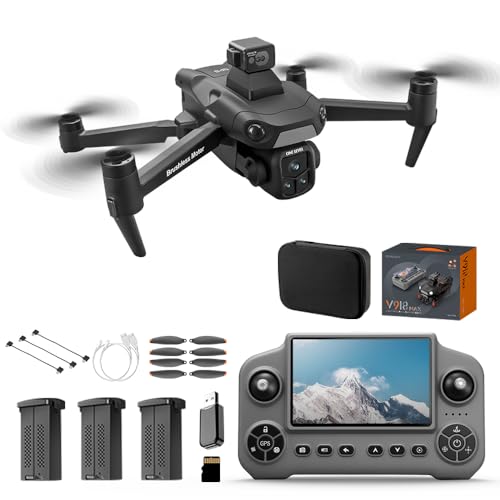
GXTDL Ultralight Drone with Screen Controller
Best for: sub-249g obstacle sensing with included screen remote
- Obstacle Sensing
- Omnidirectional Obstacle Sensing
- Video Resolution
- 8K
- Takeoff Weight
- Under 249g
- Flight Time
- 90 Mins
- Transmission Range
- 3KM
- Smart Features
- Auto Return, Follow Me
This foldable drone pairs built-in 360-degree obstacle avoidance with an ultralight sub-249-gram takeoff weight. You get three 3,000 mAh batteries providing up to 90 minutes of total flight time, an integrated screen on the remote, and up to 9,842 feet of transmission range. It suits pilots who want GPS navigation, automated return functions, and obstacle protection without registering with the FAA.
- Weighs under 249 grams to avoid FAA registration requirements
- Includes three batteries providing up to 90 minutes of total flight time
- Built-in 360-degree obstacle avoidance system for indoor and outdoor flying
- Remote control includes an integrated display and 9,842-foot transmission range
- Requires connecting a smartphone to access advanced shooting features
- Needs a minimum of 9 GPS satellites before takeoff to register a reliable home point
- Requires manual compass and gyroscope calibration prior to the first flight
- You want omnidirectional obstacle sensing on a drone that weighs under 249 grams.
- You prefer flying with a dedicated screen built directly into the remote.
- You need extended total airtime from multiple included flight batteries.
- You want full access to all shooting features without tethering a mobile phone.
- You plan to fly indoors without access to GPS satellite positioning.
Verdict: GXTDL Ultralight Obstacle Sensing Drone delivers omnidirectional sensing and triple-battery endurance in a sub-249-gram package for beginner pilots who want automated flight safeguards. Its dedicated controller display allows flying without a phone, though unlocking advanced shooting modes still requires the companion app.

DCX Volo X 4K LiDAR Drone
Best for: Long flights without geofencing limits
- Obstacle Sensing
- Omnidirectional Obstacle Sensing
- Video Resolution
- 4K
- Flight Time
- 47 min
- Gimbal Stabilization
- 3-axis with EIS
- Dimensions
- 17 × 4.5 × 4 inches
- Weight
- 14.4 ounces
The DCX Volo X is a folding camera drone equipped with 360-degree LiDAR obstacle detection and a 4K camera stabilized by a 3-axis gimbal with EIS. Its 6,000mAh battery provides up to 47 minutes of flight time, while the included controller features a built-in screen. It suits you if you want long flight sessions without geofencing restrictions.
- Up to 47 minutes of flight time from a 6,000mAh battery
- 360-degree obstacle detection powered by LiDAR sensors
- 3-axis mechanical gimbal with Electronic Image Stabilization
- Remote controller features a built-in display screen
- Weighs 14.4 ounces, placing it above the sub-249-gram regulatory threshold
- Measures 17 inches in length, making it bulkier than compact mini drones
- You want long flight sessions reaching up to 47 minutes per charge.
- You prefer an integrated screen directly on the remote controller.
- You need omnidirectional LiDAR detection without software geofencing limits.
- You want an ultralight drone weighing under 249 grams.
- You need a compact frame under 17 inches for pocket transport.
Verdict: DCX Volo X 4K LiDAR Drone fits pilots who need extended 47-minute battery endurance, integrated controller displays, and unrestricted flight zones instead of ultralight sub-249-gram sizing.
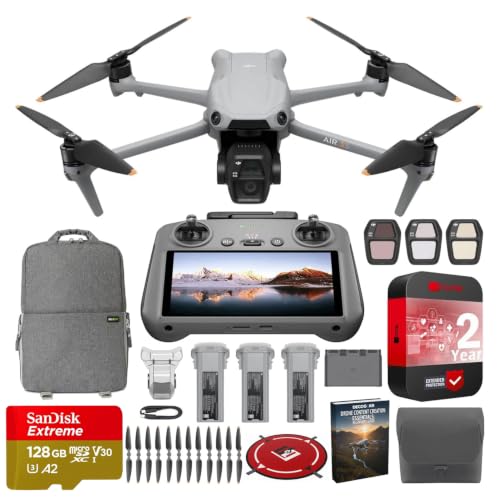
DJI Air 3S Dual-Camera Drone
Best for: Low-light travel photography with dual focal lengths
- Obstacle Sensing
- Omnidirectional Obstacle Sensing
- Video Resolution
- 4K/60fps HDR
- Sensor Size
- 1" CMOS
- Flight Time
- 45-min
- Transmission Range
- 20km
- Dimensions
- 10.5 × 12.8 × 4.17 inches
The DJI Air 3S is a dual-camera drone built with forward-facing LiDAR for nightscape omnidirectional obstacle sensing. It pairs a 1-inch CMOS primary sensor with a 70mm medium tele camera, both recording 4K/60fps HDR video. With a 45-minute flight time and a 20-kilometer transmission range, you get extended airtime and safe navigation for travel photography.
- Omnidirectional obstacle sensing powered by forward-facing LiDAR
- Dual cameras with 1-inch CMOS primary and 70mm medium tele lenses
- Up to 45 minutes of maximum flight time
- Long 20-kilometer video transmission range
- Weighs 1.6 pounds, exceeding the sub-249g lightweight class
- Video capture tops out at 4K rather than 5.1K
- You need forward LiDAR for omnidirectional obstacle sensing in dim conditions.
- You want both wide-angle and 70mm telephoto focal lengths on one drone.
- You require up to 45 minutes of flight time per battery.
- You need an ultralight drone that weighs under 249 grams.
- You require video capture resolutions beyond 4K.
Verdict: DJI Air 3S Dual-Camera Drone fits photographers who want dual focal lengths alongside LiDAR-assisted omnidirectional avoidance for low-light environments. It provides reliable 4K/60fps HDR capture across extended 45-minute flights without requiring frequent battery swaps.

DJI Mini 4 Pro Drone with RC 2
Best for: Sub-249g travel with complete obstacle coverage
- Obstacle Sensing
- Omnidirectional Obstacle Sensing
- Video Resolution
- 4K/60fps HDR
- Takeoff Weight
- Under 249 g
- Weight Class
- Under 249g
- Dimensions
- 4 × 4 × 4 inches
- Weight
- 3 pounds
The DJI Mini 4 Pro is a folding drone built for lightweight travel. It features omnidirectional obstacle sensing to track hazards in all directions. You get 4K/60fps HDR video capture with native vertical shooting, and its takeoff weight stays under 249 grams. The included RC 2 remote controller features a built-in display screen, eliminating the need to mount your phone.
- Under 249 g takeoff weight
- Omnidirectional obstacle sensing system
- 4K/60fps HDR video with native vertical shooting
- RC 2 remote controller with built-in monitor
- Includes three batteries and two-way charging hub
- Video resolution caps at 4K rather than 8K
- Product data does not specify sensor dimensions
- You want full omnidirectional sensing in a sub-249g drone.
- You prefer a remote with an integrated display instead of your phone.
- You produce vertical 4K/60fps HDR footage.
- You need higher capture resolution like 8K.
- You require a multi-camera zoom setup.
Verdict: DJI Mini 4 Pro Drone with RC 2 pairs omnidirectional obstacle detection with 4K/60fps HDR video in an ultralight sub-249g build. It serves pilots who want an integrated monitor remote and multiple batteries ready for travel.

Appresso 4K Drone with 7.2-Inch Screen Remote
Best for: pilots wanting a large built-in tablet controller
- Obstacle Sensing
- Omnidirectional Obstacle Sensing
- Video Resolution
- 4K UHD
- Flight Time
- 45 min (90 min total)
- Gimbal Stabilization
- 3-axis mechanical with EIS
- Photo Resolution
- 48MP
- Camera Configuration
- Dual Camera
This folding quadcopter features a 360-degree laser obstacle avoidance module and a dual-camera system stabilized by a 3-axis mechanical gimbal. It records 4K video, captures 48MP photos, and includes a dedicated 7.2-inch touchscreen controller with 32GB of internal storage. With two batteries offering up to 90 minutes of total flight, it suits pilots who want extended airtime without mounting a smartphone.
- 3-axis mechanical gimbal with EIS stabilization
- 360-degree laser obstacle avoidance module
- Dedicated 7.2-inch touchscreen remote with 32GB storage
- Two 4500mAh batteries delivering up to 90 minutes total flight
- Weighs 1.73 pounds, making it heavier than sub-250g options
- Battery charging takes 3 hours per pack
- You want an integrated 7.2-inch display remote without tethering a mobile phone.
- You need mechanical 3-axis stabilization combined with 360-degree laser obstacle detection.
- You plan extended shooting sessions using two 45-minute modular batteries.
- You want a lightweight drone that falls under the 249-gram threshold.
- You need quick battery turnaround times without waiting through a 3-hour recharge.
Verdict: Appresso 4K Drone with 7.2-Inch Screen Remote delivers steady 4K footage and 360-degree laser sensing for flyers who prefer a standalone tablet controller over smartphone setups. Its 1.73-pound frame and 90-minute dual-battery capacity make it a capable kit for field pilots prioritizing screen size and flight endurance.

DJI Mavic 3 Classic 4/3 CMOS Drone
Best for: large-sensor 5.1K video capture and long flights
- Obstacle Sensing
- Omnidirectional Obstacle Sensing
- Video Resolution
- 5.1K
- Sensor Size
- 4/3 CMOS
- Flight Time
- up to 46 minutes
- Transmission Range
- 15km
- Smart Features
- Auto Return
The DJI Mavic 3 Classic pairs omnidirectional obstacle sensing via APAS 5.0 with a 4/3 CMOS Hasselblad camera recording up to 5.1K video. You get up to 46 minutes of flight time, 15km transmission range, and an included DJI RC controller with a 5.5-inch screen. It suits creators prioritizing large-sensor capture and all-around object detection.
- 4/3 CMOS Hasselblad sensor captures up to 5.1K video
- Omnidirectional obstacle sensing with APAS 5.0 navigation
- Flight time rated up to 46 minutes
- DJI RC controller includes built-in 5.5-inch HD display
- Max transmission range reaches up to 15km
- Weighs 1.97 pounds, exceeding sub-249g registration thresholds
- Single camera setup lacks dedicated telephoto lenses
- You prioritize a 4/3 CMOS sensor for 5.1K video resolution.
- You want omnidirectional sensing paired with long 46-minute flight runs.
- You prefer an integrated 5.5-inch display without using a smartphone.
- You need an ultralight drone under 249 grams.
- You want a multi-lens system with optical telephoto capabilities.
Verdict: DJI Mavic 3 Classic 4/3 CMOS Drone delivers professional-grade 5.1K video and full omnidirectional safety for solo creators who do not need secondary telephoto cameras.

DJI Air 3 Dual-Camera Drone
Best for: long flights requiring dual camera angles
- Obstacle Sensing
- Omnidirectional Obstacle Sensing
- Video Resolution
- 4K/60fps HDR
- Flight Time
- 46-Min Max
- Photo Resolution
- 48MP
- Camera Configuration
- Dual Camera
- Dimensions
- 10.2 × 12.8 × 4.17 inches
The DJI Air 3 Dual-Camera Drone pairs omnidirectional obstacle sensing with medium telephoto and wide-angle cameras. You get up to 46 minutes of flight time, 48MP photo capture, and 4K/60fps HDR video recording. Its 20 km O4 transmission feed keeps your connection stable, making it well suited for pilots who need extended flight endurance and versatile framing options.
- Omnidirectional obstacle sensing covers all directions
- Dual primary cameras provide wide-angle and medium telephoto views
- Maximum flight time reaches 46 minutes
- O4 video transmission supports 1080p/60fps feeds up to 20 km
- Weighs 1.59 pounds, exceeding the 249-gram registration threshold
- DJI RC-N2 remote requires a connected smartphone instead of a built-in screen
- DJI Fly app requires direct download outside the Google Play store
- You want dual focal lengths with wide-angle and medium telephoto options.
- You need flight sessions up to 46 minutes per battery.
- You fly in complex environments that require omnidirectional obstacle sensing.
- You want a sub-249g drone to avoid registration requirements.
- You prefer an integrated screen built directly into the remote controller.
Verdict: DJI Air 3 Dual-Camera Drone provides comprehensive obstacle avoidance and 46-minute endurance alongside two dedicated focal lengths. It fits flyers who want multi-angle 4K imaging and rely on a phone-mounted controller.
Specifications side by side
| Spec | DJI Mini 5 Pro 1-Inch CMOS Drone | DJI Neo 2 151g 4K Drone | SKYROVER X1 4K Drone | DJI Air 3S Dual-Camera 4K Drone | DJI Mini 5 Pro Drone with RC 2 | DJI Mini 5 Pro Drone with RC 2 Remote | DJI Neo 2 4K Drone with Guards | KUNRUN Under 249g GPS 4K Drone | GXTDL Ultralight Drone with Screen Controller | DCX Volo X 4K LiDAR Drone | DJI Air 3S Dual-Camera Drone | DJI Mini 4 Pro Drone with RC 2 | Appresso 4K Drone with 7.2-Inch Screen Remote | DJI Mavic 3 Classic 4/3 CMOS Drone | DJI Air 3 Dual-Camera Drone |
|---|---|---|---|---|---|---|---|---|---|---|---|---|---|---|---|
| Video Resolution | 4K/60fps HDR | 4K | 4K/60fps HDR | 4K/60fps HDR | 4K/60fps HDR | 4K/60fps HDR | 4K | 4K | 8K | 4K | 4K/60fps HDR | 4K/60fps HDR | 4K UHD | 5.1K | 4K/60fps HDR |
| Sensor Size | 1-inch CMOS | – | 1/1.32" CMOS | 1″ CMOS | 1-inch CMOS | 1-Inch CMOS | – | – | – | – | 1" CMOS | – | – | 4/3 CMOS | – |
| Takeoff Weight | 249.9 g ± 4 g | 151g | Under 249g | – | less than 249 grams | – | 151g | Under 249g | Under 249g | – | – | Under 249 g | – | – | – |
| Flight Time | Up to 36 min | – | 32 min (96 min total) | 45-min | – | – | – | Up to 75 minutes | 90 Mins | 47 min | 45-min | – | 45 min (90 min total) | up to 46 minutes | 46-Min Max |
| Obstacle Sensing | Omnidirectional | Omnidirectional | 360° | Omnidirectional | Omnidirectional | Omnidirectional | Omnidirectional | 360° | 360° | 360° | Omnidirectional | Omnidirectional | 360° | Omnidirectional | Omnidirectional |
| Gimbal Stabilization | – | – | 3-axis | – | – | 225° Flexible Gimbal | – | – | – | 3-axis with EIS | – | – | 3-axis mechanical with EIS | – | – |
| Transmission Range | – | – | 9.32 miles | 20km | – | – | – | – | 3KM | – | 20km | – | – | 15km | – |
| Photo Resolution | – | – | 48MP | – | 50MP | – | – | – | – | – | – | – | 48MP | – | 48MP |
| Stabilization | – | – | – | – | – | – | – | – | – | – | – | – | 3-Axis Gimbal | – | – |
| Weight Class | – | – | Under 249g | – | – | – | – | Under 249g | – | – | – | Under 249g | – | – | – |
| Camera Configuration | – | – | – | Dual Camera | – | – | – | – | – | – | – | – | Dual Camera | – | Dual Camera |
| Smart Features | – | Palm Takeoff | – | – | – | – | Palm Takeoff | Follow Me | Auto Return, Follow Me | – | – | – | Auto Return, Follow Me, Bait Release | Auto Return | – |
| Target Audience | Beginners | – | – | – | – | – | – | – | Beginners | – | – | – | – | – | – |
| Features | – | – | – | – | – | – | – | GPS | GPS | – | – | – | GPS | – | – |
| Dimensions | 12 × 15 × 3.58 inches | 6.74 × 5.8 × 1.59 inches | 5.9 × 3.66 × 2.6 inches | 10.5 × 12.8 × 4.17 inches | 15 × 12 × 3.58 inches | 6.2 × 5.1 × 1.9 inches | 6.74 × 5.8 × 1.59 inches | 13.2 × 10.5 × 3.86 inches | 9.84 × 3.93 × 12.2 inches | 17 × 4.5 × 4 inches | 10.5 × 12.8 × 4.17 inches | 4 × 4 × 4 inches | 15.7 × 15.7 × 4.72 inches | 8.7 × 3.8 × 3.5 inches | 10.2 × 12.8 × 4.17 inches |
| Weight | 8.78 ounces | 5.33 ounces | 8.78 ounces | 1.6 pounds | 10.4 ounces | – | 5.33 ounces | 8.78 ounces | 3.1 pounds | 14.4 ounces | 1.6 pounds | 3 pounds | 1.73 pounds | 1.97 pounds | 1.59 pounds |
| Size | 7.00 | DJI Neo 2 Fly More Combo (Drone Only) | – | 214.19 x 100.63 x 89.17 mm | – | – | – | – | – | – | 557.17 cubic inches | 4 inches | – | 8.7 x 3.8 x 3.5 inches | Foldable; 0.85" L x 1.06" W x 0.35" H (unfolded) |
| Color | Grey | Gary | Yellow | gray | Slate | gray | Gary | Black | Black-3B | Black | Gray | Mini 4 Pro Kit | Black | Grey | Gray |
| Model | 6937224123090 | 6937224131736 | – | 6941565989925 | DVN3NT | – | – | – | – | – | – | MAVIC MINI STRIP | – | DJI Mavic 3 Classic | DT3232 |
If you need payload release for angling instead of omnidirectional sensors, see the best fishing drones with 4K Camera.
How we picked these drones
We identified this guide by scanning Amazon listings for the specific feature: Omnidirectional Obstacle Sensing. We only included products where the listing explicitly states this capability in the title or feature list. This ensures every drone on the list provides full-surround safety detection as advertised by the manufacturer. We did not handle or test any units ourselves. All details come strictly from the published specifications and feature lists on the product pages.
The 15 products are ordered by availability first. We then sorted them by the listing's overall rating, weighted by the number of ratings. Finally, we considered how many of the guide's criteria the specs meet. This method keeps in-stock items visible and prioritizes highly rated models. Prices and stock levels update live on the page and are not part of this selection process.
How to choose the right drone
Check sensor size for quality
Sensor size determines how much light the camera captures. Larger sensors produce cleaner images in low light and better dynamic range. The DJI Mini 5 Pro and Air 3S use a 1-Inch CMOS sensor for superior clarity. The DJI Mavic 3 Classic features an even larger 4/3 CMOS sensor for professional-grade video. Smaller sensors, like those in the DJI Neo 2, may struggle in dim environments. You should match the sensor to your lighting conditions and desired image depth.
Verify weight class regulations
Weight dictates where and how you can fly. Many drones on this list weigh under 249 grams, which often simplifies registration and airspace rules. The DJI Mini 5 Pro and SKYROVER X1 fall into this category, making them ideal for travel. Heavier models like the DJI Air 3S weigh 1.6 pounds and require different compliance steps. If you plan to fly frequently in regulated areas, selecting a sub-249-gram model reduces administrative hurdles and keeps your setup portable.
Review stabilization systems
Stabilization ensures your footage remains smooth during flight. A 3-axis gimbal mechanically counteracts drone movement, resulting in steady, professional-looking video. The Appresso 4K Drone explicitly includes a 3-axis gimbal for this purpose. While most drones on this list have gimbals, checking the specification confirms mechanical stability rather than just electronic correction. For cinematic shots or windy conditions, a robust mechanical gimbal is essential to prevent jitter and maintain sharp focus on your subject.
Consider camera configuration needs
Camera configuration affects the variety of shots you can take. Dual-camera drones, such as the DJI Air 3S and Appresso, offer multiple focal lengths. This allows you to switch between wide-angle and telephoto views without moving the drone. Single-camera models like the DJI Neo 2 provide one perspective. If you need diverse angles for storytelling or real estate, a dual-camera setup provides flexibility. Otherwise, a single high-quality lens may suffice for straightforward aerial photography.
Evaluate remote control options
The controller type changes how you monitor your flight. Some bundles include a screen remote, like the DJI Mini 5 Pro with RC 2. This integrated display allows you to fly without using a smartphone, saving battery and reducing setup time. Other models, like the DJI Air 3, rely on a phone-mounted controller. If you prefer a dedicated device or want to avoid phone compatibility issues, choose a bundle with a built-in screen remote for a more streamlined experience.
Frequently asked questions
Do all drones on this list have omnidirectional obstacle sensing?
Yes. Every model in this guide includes omnidirectional obstacle sensing. This feature detects objects in all directions to help the drone avoid collisions. You get safety during complex maneuvers or tight spaces. The list covers 15 models, all sharing this specific safety capability.
Which drone is best for beginners wanting safety?
The DJI Neo 2 is ideal for beginners. It weighs 5.33 ounces and features palm takeoff for easy launches. It provides reliable obstacle avoidance in a compact package. This makes it suitable for casual flyers who prioritize portability and safety over raw power.
Can I fly these drones without a smartphone?
Several models support flying without a phone. The DJI Mini 5 Pro with RC 2 includes an integrated display for dedicated control. The KUNRUN Under 249g GPS 4K Drone also comes with a screen-equipped remote. These options allow you to fly without relying on a smartphone display.
What sensor size offers the best image quality?
The DJI Mavic 3 Classic uses a 4/3 CMOS sensor. This larger sensor captures professional-grade 5.1K video. Other top picks like the DJI Mini 5 Pro and Air 3S use a 1-Inch CMOS sensor. Larger sensors generally produce cleaner images in low light.
Which drone is best for low-light environments?
The DJI Air 3S is designed for low-light navigation. It uses LiDAR-assisted omnidirectional avoidance for better detection in dim conditions. It also features a 1-Inch CMOS sensor for reliable 4K/60fps HDR capture. This makes it suitable for aerial creators working in challenging lighting.
Are there drones under 249 grams with full sensing?
Yes, many models weigh under 249 grams. The DJI Mini 5 Pro weighs 8.78 ounces and provides LiDAR-assisted avoidance. The SKYROVER X1 is also a sub-249g package with 360-degree sensing. These ultralight builds allow you to stay under regulatory limits while maintaining full-surround safety.
Which drone has the longest flight time?
The DCX Volo X 4K LiDAR Drone offers 47-minute battery endurance. The DJI Air 3S provides extended 45-minute flights. The Appresso 4K Drone supports 90 minutes of dual-battery capacity. These models suit pilots who need long sessions without frequent battery swaps.


