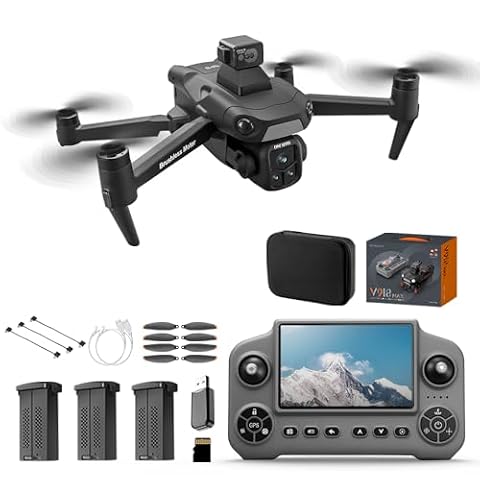
Looking Beyond the Autel Robotics EVO II Dual? 6 Alternatives Worth a Look
Explore 6 drones to weigh against the EVO II Dual 640T. Compare thermal cameras, visible-light resolution, obstacle sensing, and body weight for your flight operations.
As Amazon Associates, we earn from qualifying purchases. This means we may receive a small commission at no extra cost to you if you click through and make a purchase.
As an Amazon Associate we earn from qualifying purchases. Links on this page are affiliate links.
If you need dedicated aerial imaging, exploring autel robotics evo ii dual alternatives can help you find the right fit for your workflow. The Autel EVO II Dual 640T provides serious capabilities, including a 640×512 thermal sensor, a 4K visible-light camera, and up to 38 minutes of flight time. Its SkyLink 2.0 system supports transmission up to 15KM, while 19 groups of sensors assist with real-time mapping. However, you might prefer a different platform if you do not require specialized thermal hardware or if you want an airframe lighter than 2.51 pounds.
You might also seek different features, such as a 1-inch CMOS sensor, automated palm takeoff, or a compact sub-249-gram design from DJI. The 6 alternatives on this list were chosen because their specifications overlap with the original drone. Each model shares key performance specs, such as 4K video resolution, advanced obstacle sensing, or long flight endurance, giving you clear technical points to compare.
How Each Alternative Compares
Autel EVO II Dual Thermal Camera Drone
The Autel EVO II Dual Thermal Camera Drone shares the 4K video resolution and orange body of the EVO II Dual 640T, but it weighs slightly less at 2.4 pounds compared to 2.51 pounds. It includes a dedicated HDMI output and dual-sensor radiometric imaging for monitoring feeds directly on external screens during night missions. However, it lacks the specific 15-kilometer SkyLink 2.0 transmission system detailed on the 640T. You should choose this model if you need direct HDMI video output for ground stations and want a marginally lighter industrial platform for thermal search operations.
DJI Mini 4K Fly More Combo
The DJI Mini 4K Fly More Combo drops your carrying weight down to 8.47 ounces, far below the 2.51-pound weight of the Autel EVO II Dual 640T. It matches the 4K video resolution and adds a stabilized 3-axis gimbal with automated return features in a sub-249g design. However, you give up the 640×512 thermal imaging sensor, the 100-meter recognition range, and the 15-kilometer SkyLink transmission system. Pick this quadcopter if you want an ultra-portable aircraft for casual daylight video recording and do not require thermal detection tools or complex industrial obstacle mapping.
DJI Mini 5 Pro 1-Inch CMOS Drone
The DJI Mini 5 Pro carries a 1-inch CMOS sensor, which is substantially larger than the 0.5-inch CMOS sensor found on the Autel 640T. Weighing 8.78 ounces, it keeps total takeoff mass under 250 grams while providing omnidirectional obstacle sensing and 4K recording. In exchange for this lighter frame and larger visual sensor, you lose all thermal scanning capabilities, the 16x digital zoom, and the 15-kilometer SkyLink transmission. You should select the Mini 5 Pro if your priority is high-grade daylight video capture in a compact airframe rather than commercial infrared inspection.
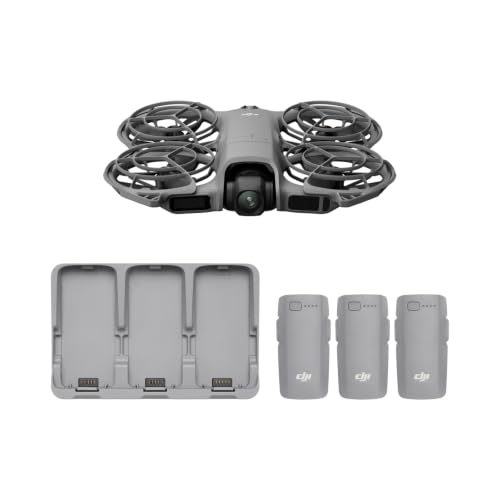
DJI Neo 2 151g 4K Drone
The DJI Neo 2 weighs just 5.33 ounces, making it dramatically smaller than the 2.51-pound Autel EVO II Dual 640T. It introduces convenient palm takeoff and retains omnidirectional obstacle sensing alongside 4K video recording. To achieve this pocket-friendly form factor, it sacrifices the 38-minute flight time, the 15-kilometer SkyLink 2.0 transmission range, and the entire 640×512 thermal imaging sensor array. You should buy the Neo 2 if you need a quick-deploying aircraft for hands-free, close-range 4K subject tracking on the move, without the setup overhead of a dedicated commercial inspection rig.
DJI Neo Fly More Combo 4K Drone
The DJI Neo Fly More Combo provides an ultra-lightweight 4.76-ounce airframe with palm takeoff and automated subject tracking, contrasting sharply with the 2.51-pound Autel. Both drones capture 4K video, but the Neo is designed for rapid personal recording rather than enterprise tasks. Choosing the Neo means foregoing the 640×512 radiometric thermal sensor, the 19 sensor groups, the 15-kilometer control link, and the 38-minute endurance of the Autel. You should pick this combo if you want an effortless, pocketable device for personal vlogging and casual tracking shots instead of a specialized industrial drone.
DJI Mini 3 with DJI RC
The DJI Mini 3 weighs only 8.75 ounces while matching the 38-minute flight time and 4K video resolution of the Autel EVO II Dual 640T. It integrates reliable GPS positioning and automatic return features into a sub-249-gram package. However, it gives up the Autel's 640×512 thermal imaging sensor, 15-kilometer SkyLink transmission, and 19-group obstacle sensor network. You should choose the Mini 3 if you need extended battery endurance and GPS reliability for outdoor 4K aerial photography without the bulk, heavy airframe, or specialized inspection hardware of the EVO II Dual.
| # | Product | Best for | Price |
|---|---|---|---|
| 1 | Autel EVO II Dual 640T Thermal Drone Best overall | commercial thermal inspections and emergency operations | |
| 2 | Autel EVO II Dual Thermal Camera Drone Best premium | industrial inspections and thermal search operations | |
| 3 | DJI Mini 4K Fly More Combo Best budget | Sub-249g recreational 4K aerial filming | |
| 4 | DJI Mini 5 Pro 1-Inch CMOS Drone Best 1-inch cmos | sub-250g video with a 1-inch CMOS sensor | |
| 5 | DJI Neo 2 151g 4K Drone Also great | palm-launch 4K tracking on the go | |
| 6 | DJI Neo Fly More Combo 4K Drone Also great | lightweight palm-launch vlogging and automated tracking | |
| 7 | DJI Mini 3 with DJI RC Best gps | GPS-assisted recreational 4K aerial recording |

Autel EVO II Dual 640T Thermal Drone
Best for: commercial thermal inspections and emergency operations
- Video Resolution
- 4K
- Sensor Size
- 0.5'' CMOS
- Flight Time
- 38Mins
- Transmission Range
- up to 15KM
- Photo Resolution
- 12MP
- Dimensions
- 9.64 × 5.11 × 4.37 inches
The Autel EVO II Dual Thermal Drone pairs a 640×512 thermal imaging sensor with a 4K visible camera. You get up to 38 minutes of flight time, a 15-kilometer transmission range, and 19 sensor groups for navigation. This drone suits you if you conduct structural inspections or emergency operations requiring simultaneous thermal and visual monitoring.
- Dual camera setup with 640×512 thermal and 4K visible sensors
- Up to 38 minutes of rated flight time
- SkyLink 2.0 transmission reaching up to 15 kilometers
- 19 groups of onboard sensors enabling real-time 3D mapping
- Total weight of 2.51 pounds exceeds ultralight limits
- Visible camera sensor size is limited to 0.5 inches
- You need 640×512 thermal imaging alongside standard 4K video recording.
- You require up to 15 kilometers of tri-band video transmission range.
- You handle infrastructure inspections or emergency monitoring operations.
- You want an ultralight drone weighing under 249 grams.
- You require a larger 1-inch visible image sensor for primary photography.
Verdict: Autel EVO II Dual Thermal Drone provides dedicated thermal capabilities and multi-sensor navigation for commercial pilots. It delivers the specialized sensor hardware required for industrial surveys and aerial inspections.

Autel EVO II Dual Thermal Camera Drone
Best for: industrial inspections and thermal search operations
- Video Resolution
- 4K
- Transmission Range
- 15 km
- Photo Resolution
- 12MP
- Dimensions
- 9.64 × 5.1 × 4.37 inches
- Weight
- 2.4 pounds
This drone pairs a 640×512 thermal imaging sensor with a 12MP 4K visual camera. You get a 15 km SkyLink 2.0 transmission range, 10 thermal color palettes, and a dedicated 7.9-inch Smart Controller V3 with 2000 nits brightness. It suits professionals who need aerial infrared inspections, night operations, and external monitor output via built-in HDMI.
- 640×512 thermal sensor with 16x digital zoom and 10 color palettes
- 7.9-inch Smart Controller V3 with 2000 nits screen and HDMI output
- SkyLink 2.0 tri-band transmission reaching up to 15 km
- 4K visual camera with Night Mode ISO up to 320,000
- Total weight of 2.4 pounds makes it heavier than compact alternatives
- Visual still photography is limited to 12MP resolution
- You need high-resolution 640×512 radiometric thermal imaging for inspection tasks.
- You want an integrated 2000-nit controller display with full-size HDMI output.
- You require up to 15 km transmission across multiple frequency bands.
- You want an ultralight drone that weighs under 249 grams.
- You need visual still photos at resolutions higher than 12MP.
Verdict: Autel EVO II Dual Thermal Drone provides dual-sensor radiometric imaging and dedicated HDMI output for operators conducting aerial inspections and night missions.

DJI Mini 4K Fly More Combo
Best for: Sub-249g recreational 4K aerial filming
- Video Resolution
- 4K Ultra HD
- Takeoff Weight
- Under 249 g
- Flight Time
- 31-min
- Gimbal Stabilization
- 3-axis
- Transmission Range
- up to 10 km
- Weight Class
- Under 249g
The DJI Mini 4K Fly More Combo is an ultralight drone with a 4K camera and a 3-axis gimbal. Weighing under 249 grams, it avoids FAA recreational registration. You get up to 93 minutes of total airtime across three batteries, Level 5 wind resistance, and a 10 km transmission range. It suits you if you want high-resolution footage without enterprise-grade hardware.
- Sub-249 g takeoff weight requires no recreational FAA registration
- 4K Ultra HD video stabilized by a 3-axis mechanical gimbal
- Up to 93 minutes of total flight time across three batteries
- Level 5 wind resistance rated for speeds up to 38 kph
- Lacks the thermal imaging sensor found on enterprise inspection drones
- Android users must download the DJI Fly app directly from DJI rather than Google Play
- You want a sub-249 g drone to bypass FAA recreational registration requirements.
- You need 4K video stabilized by a 3-axis mechanical gimbal.
- You plan extended flights using a three-battery setup.
- You need dual-sensor thermal cameras for industrial work.
- You avoid sideloading Android apps outside the standard app store.
Verdict: DJI Mini 4K Fly More Combo delivers stabilized 4K video and sub-249 g convenience for pilots who need extended flight times without thermal sensors.

DJI Mini 5 Pro 1-Inch CMOS Drone
Best for: sub-250g video with a 1-inch CMOS sensor
- Video Resolution
- 4K/60fps HDR
- Sensor Size
- 1-inch CMOS
- Takeoff Weight
- 249.9 g ± 4 g
- Flight Time
- Up to 36 min
- Obstacle Sensing
- Omnidirectional
- Target Audience
- Beginners
The DJI Mini 5 Pro is a compact folding drone featuring a 1-inch CMOS sensor that captures 4K/60fps HDR video. Weighing 249.9 grams, it includes omnidirectional obstacle sensing with forward LiDAR, a 225-degree rotating gimbal for vertical shooting, and up to 36 minutes of flight time per charge. It suits flyers wanting advanced imaging in a sub-250-gram build.
- 1-inch CMOS sensor with 4K/60fps HDR video capability
- Omnidirectional obstacle sensing paired with forward-facing LiDAR
- Gimbal supports true vertical filming and 225° roll rotation
- Lightweight takeoff weight of 249.9 g ± 4 g with 42GB internal storage
- Included DJI RC-N3 controller requires using your own smartphone as the screen
- DJI Fly app for Android requires direct manual download outside Google Play
- You want a sub-250-gram drone equipped with a large 1-inch camera sensor.
- You require omnidirectional obstacle sensing and LiDAR support for low-light navigation.
- You produce native portrait-oriented video using a physical vertical gimbal.
- You require integrated thermal imaging hardware for commercial inspections.
- You prefer a remote controller with an integrated high-brightness monitor.
Verdict: DJI Mini 5 Pro 1-Inch CMOS Drone delivers large-sensor 4K capture and full omnidirectional obstacle awareness in a sub-250-gram airframe. It fits content creators who need portable visual capture and rotating gimbal angles without registering a heavier craft.
DJI Neo 2 151g 4K Drone
Best for: palm-launch 4K tracking on the go
- Video Resolution
- 4K
- Takeoff Weight
- 151g
- Obstacle Sensing
- Omnidirectional
- Smart Features
- Palm Takeoff
- Dimensions
- 6.74 × 5.8 × 1.59 inches
- Weight
- 5.33 ounces
The DJI Neo 2 is an ultralight drone designed for simple, handheld operation. Weighing 151 grams, it features 4K video recording, omnidirectional obstacle sensing, and integrated full-coverage propeller guards. You can launch and land it directly from your palm using gesture controls or track subjects with ActiveTrack. It suits you if you need portable tracking without carrying bulky flight equipment.
- Ultralight 151g takeoff weight with C0 certification
- Omnidirectional obstacle sensing with full propeller guards
- 4K video capture with ActiveTrack subject tracking
- Includes three batteries and a charging hub
- No thermal imaging sensor for commercial inspection use
- Drone-only combo does not include a standalone physical remote controller
- Android DJI Fly app requires direct download outside Google Play
- You want an ultra-compact 151-gram drone with built-in propeller guards.
- You prefer hands-free operation using palm takeoff and gesture controls.
- You need 4K automated subject tracking via ActiveTrack.
- You require a dual thermal imaging camera system.
- You want a physical remote controller included out of the box.
Verdict: DJI Neo 2 4K Drone provides automated palm-launch flight and 4K recording in a compact 151-gram frame with omnidirectional sensing. It fits creators who need fast, close-range tracking without managing complex controller setups.

DJI Neo Fly More Combo 4K Drone
Best for: lightweight palm-launch vlogging and automated tracking
- Video Resolution
- 4K UHD
- Takeoff Weight
- 135g
- Smart Features
- Palm Takeoff
- Dimensions
- 6.18 × 5.12 × 1.9 inches
- Weight
- 4.76 ounces
The DJI Neo Fly More Combo provides a compact alternative weighing just 135 grams. It records 4K UHD video and includes full-coverage propeller guards, level-4 wind resistance, and palm takeoff functionality. With three batteries, a two-way charging hub, and the RC-N3 controller included, this setup fits everyday vloggers and casual pilots needing portable tracking without complex flight setup.
- Weighs 135g and requires no FAA registration or Remote ID
- Records stabilized 4K UHD video with level-4 wind resistance
- Supports palm takeoff, voice control, mobile app, and RC-N3 remote
- Includes three batteries and a two-way charging hub
- Wind resistance is limited to level 4
- Lacks a thermal imaging sensor
- You want an ultra-lightweight 135g drone that avoids FAA registration.
- You need palm takeoff and automated subject tracking for quick clips.
- You prefer multiple control options including voice, phone, and standard remote.
- You need a thermal camera sensor for industrial tasks.
- You regularly fly in wind conditions exceeding level 4.
Verdict: DJI Neo Fly More Combo 4K Drone suits creators who want a 135g pocket-sized aircraft with automated tracking and multiple control methods.

DJI Mini 3 with DJI RC
Best for: GPS-assisted recreational 4K aerial recording
- Video Resolution
- 4K HDR
- Takeoff Weight
- Under 249 g
- Flight Time
- 38-Min
- Gimbal Stabilization
- 3-axis mechanical
- Transmission Range
- up to 10 km (32,800 feet)
- Smart Features
- Auto Return
This compact camera drone weighs under 249 grams and records 4K HDR video. It features a 38-minute standard flight time, GPS Return to Home, and a 10-kilometer video transmission range. You also get a 3-axis mechanical gimbal with true vertical shooting. It suits you if you need reliable outdoor navigation and portable recording without recreational FAA registration requirements.
- Under 249 g weight avoids recreational FAA registration and Remote ID
- GPS Return to Home, precise hovering, and auto takeoff/landing
- Up to 38 minutes of standard flight time
- Up to 10 km HD video transmission range
- 3-axis mechanical gimbal with True Vertical Shooting
- Lacks thermal imaging capabilities present on enterprise platforms
- Intelligent Flight Battery Plus increases weight above 249 g
- Wind resistance capped at Level 5 (38 kph)
- You want reliable GPS navigation with automated Return to Home safety features.
- You need a lightweight 4K drone under 249 grams for recreational flying.
- You capture vertical video formats for tall subjects like buildings and waterfalls.
- You need thermal sensors for industrial inspection or night tracking operations.
- You routinely fly in wind conditions stronger than 38 kph.
Verdict: DJI Mini 3 Drone with DJI RC delivers dependable GPS return functions, 4K HDR footage, and up to 38 minutes of flight in a sub-249-gram airframe. It fits recreational operators wanting reliable positioning and long airtime without the bulk of heavy commercial quadcopters.
Specifications side by side
| Spec | Autel EVO II Dual 640T Thermal Drone | Autel EVO II Dual Thermal Camera Drone | DJI Mini 4K Fly More Combo | DJI Mini 5 Pro 1-Inch CMOS Drone | DJI Neo 2 151g 4K Drone | DJI Neo Fly More Combo 4K Drone | DJI Mini 3 with DJI RC |
|---|---|---|---|---|---|---|---|
| Video Resolution | 4K | 4K | 4K Ultra HD | 4K/60fps HDR | 4K | 4K UHD | 4K HDR |
| Sensor Size | 0.5'' CMOS | – | – | 1-inch CMOS | – | – | – |
| Takeoff Weight | – | – | Under 249 g | 249.9 g ± 4 g | 151g | 135g | Under 249 g |
| Flight Time | 38Mins | – | 31-min | Up to 36 min | – | – | 38-Min |
| Obstacle Sensing | – | – | – | Omnidirectional | Omnidirectional | – | – |
| Gimbal Stabilization | – | – | 3-axis | – | – | – | 3-axis mechanical |
| Transmission Range | up to 15KM | 15 km | up to 10 km | – | – | – | up to 10 km (32,800 feet) |
| Photo Resolution | 12MP | 12MP | – | – | – | – | – |
| Stabilization | – | – | 3-Axis Gimbal | – | – | – | – |
| Weight Class | – | – | Under 249g | – | – | – | – |
| Smart Features | – | – | Auto Return | – | Palm Takeoff | Palm Takeoff | Auto Return |
| Target Audience | – | – | – | Beginners | – | – | – |
| Features | – | – | Stabilization | – | – | – | GPS |
| Dimensions | 9.64 × 5.11 × 4.37 inches | 9.64 × 5.1 × 4.37 inches | 9.65 × 11.4 × 2.2 inches | 12 × 15 × 3.58 inches | 6.74 × 5.8 × 1.59 inches | 6.18 × 5.12 × 1.9 inches | 9.88 × 14.3 × 2.83 inches |
| Weight | 2.51 pounds | 2.4 pounds | 8.47 ounces | 8.78 ounces | 5.33 ounces | 4.76 ounces | 8.75 ounces |
| Color | Orange | Orange | gray | Grey | Gary | gray | gray |
| Model | – | – | 6941565980311 | 6937224123090 | 6937224131736 | 6941565988294 | MT3PD |
| Size | – | – | – | 7.00 | DJI Neo 2 Fly More Combo (Drone Only) | 6.18 x 5.12 x 1.9 inches | – |
If you also maintain outdoor property, you can compare hardware specifications for redroad robotic pool cleaner dual drive alternatives.
Frequently asked questions
Which alternatives feature omnidirectional obstacle sensing?
If you want omnidirectional obstacle sensing, both the DJI Mini 5 Pro and DJI Neo 2 include this feature. The DJI Mini 5 Pro pairs all-around sensing with a 1-inch CMOS sensor at 8.78 ounces. The DJI Neo 2 provides omnidirectional awareness in a smaller 5.33-ounce airframe designed for palm takeoff.
Can you launch any of these alternatives directly from your hand?
Yes, both the DJI Neo 2 and the DJI Neo Fly More Combo support palm takeoff. These compact drones allow you to start flights without a standard takeoff surface or ground pad. The DJI Neo weighs 4.76 ounces, while the DJI Neo 2 weighs 5.33 ounces and adds omnidirectional obstacle sensing.
Which alternative comes equipped with a 1-inch CMOS sensor?
The DJI Mini 5 Pro features a 1-inch CMOS sensor alongside 4K video recording. A larger visual sensor helps capture clear images across varied lighting environments. This model also provides omnidirectional obstacle sensing while maintaining a lightweight profile of 8.78 ounces, making it suitable for portable aerial content creation.
What is the lightest drone among these alternatives?
The DJI Neo Fly More Combo is the lightest option listed, weighing 4.76 ounces. Its airframe measures 6.18 inches long, 5.12 inches wide, and 1.9 inches high. It features palm takeoff and 4K video recording, which suits users seeking the smallest possible form factor for rapid personal recording.
Which models include automated return features?
The DJI Mini 4K and DJI Mini 3 both specify auto return capabilities. The DJI Mini 4K utilizes a 3-axis gimbal for stabilized 4K footage at 8.47 ounces. The DJI Mini 3 integrates GPS positioning, Auto Return, and up to 38 minutes of flight time in an 8.75-ounce aircraft.
How do sub-249g drones differ from commercial thermal models?
Sub-249g alternatives like the DJI Mini 4K emphasize lightweight recreational flight rather than industrial inspections. Commercial options such as the Autel EVO II Dual weigh over two pounds to carry specialized thermal hardware. Lighter models focus entirely on standard 4K visible capture, 3-axis gimbal stabilization, and compact transport without heavy equipment.